
Heat Pump Installation
New systems sized for both seasons in Ocala.
Heating Services
An outdoor unit caked in ice, a thermostat stuck on “Aux” or a system that cools when it should heat. We diagnose heat pump problems in both seasons and fix the cause.
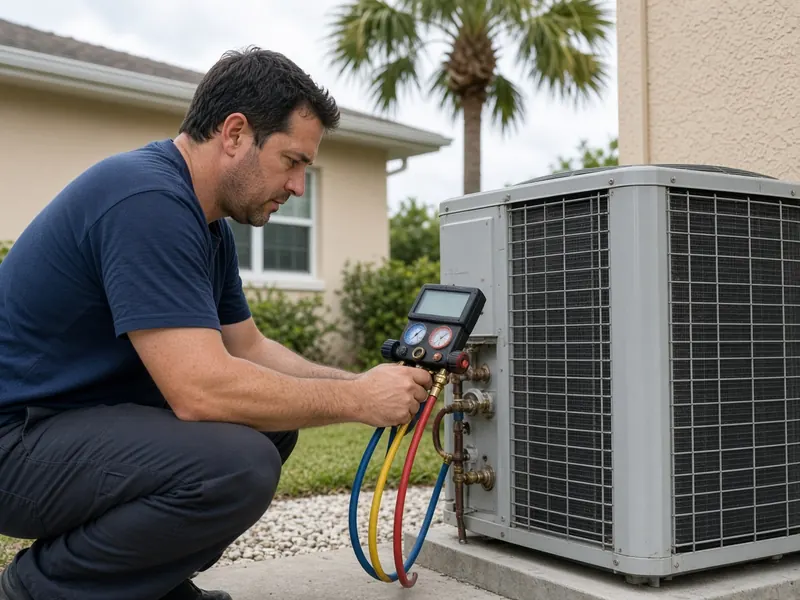
Ventis repairs residential heat pumps across Ocala and the rest of Marion County, including split systems, packaged heat pumps and the air handlers and controls that go with them. Heat pumps work year-round here, so a repair often restores both your winter heat and your summer cooling.
A heat pump is an air conditioner that can run backward. In heating mode it pulls heat from outdoor air, even cool air, and releases it indoors. That extra ability adds parts a standard AC does not have: a reversing valve, a defrost control and sensor, heating-mode metering and a thermostat that coordinates backup heat. Most winter heat pump calls trace back to one of those. Cooling-season failures such as warm air in July, a frozen indoor coil or a clogged drain are covered on our air conditioner repair page.
Do not chip at the ice; the coil fins and tubing are easy to puncture. Set the thermostat to emergency heat so the strips keep the house warm without straining the compressor, then call (352) 230‑9545 to have the defrost system checked.
A thin layer of frost on the outdoor coil is normal on cold, humid mornings. The heat pump clears it by switching briefly to cooling mode, and a guide from the Consortium for Energy Efficiency notes that defrost typically lasts 5 to 15 minutes. Heavy ice that builds over hours, or a unit encased in ice, means defrost is not working or something is helping the ice form.
Common causes include a failed defrost control board, a faulty coil temperature sensor, a reversing valve that will not shift, a low refrigerant charge, an outdoor fan motor that has stopped and water pouring onto the unit from a gutter or roof edge. Each points to a different repair, so the system is tested in heating mode and through a forced defrost.
Short periods of auxiliary heat are expected during defrost and when you raise the thermostat by several degrees. Constant aux heat in mild weather usually means the heat pump is not producing enough heat on its own, because of low charge, a stuck reversing valve, a dirty outdoor coil or a compressor problem, or that the thermostat or outdoor lockout is configured to call for strips too early.
This matters for your bill. The CEE guide describes auxiliary strip heat as a costly mode and recommends having an HVAC professional check the system if you see it running often. The Florida energy code also requires controls that keep backup heat off whenever the heat pump can satisfy the thermostat, outside of defrost or a malfunction.
The reversing valve redirects refrigerant so the outdoor coil can absorb heat in winter and reject it in summer. It is moved by a small solenoid coil controlled by the thermostat. When the solenoid fails, the signal wire is loose or the valve body sticks partway, the system may heat in one mode only, run backward or lose capacity in both.
Diagnosis starts with the simple parts: thermostat configuration, the control signal and the solenoid. If the valve itself is stuck or leaking internally, replacing it involves recovering the refrigerant, brazing in a new valve and evacuating and recharging the system, which brings repair-or-replace into the conversation on older equipment.
Defrost is managed by a control board that watches coil temperature, and on some models outdoor temperature or run time. When conditions call for it, the board shifts the reversing valve, stops the outdoor fan and usually brings on backup heat so the house does not get a blast of cool air. When the coil warms enough, it switches back.
A sensor that has slipped off its tube or failed electrically, a board with a bad relay or a timing setting that does not suit the conditions can stop defrost entirely or make it run far more often than needed. Research presented by the National Renewable Energy Laboratory to the Department of Energy describes defrost as a measurable drain on heat pump efficiency, so a defrost system that misbehaves costs money even before it causes a no-heat call.
A heat pump that is low on refrigerant heats poorly, ices up more easily and leans on backup heat. Charge is harder to verify accurately in cold weather, so technicians follow the manufacturer’s heating-mode procedures or confirm the charge when conditions allow. Any loss of refrigerant means there is a leak, and the leak has to be found and repaired before the system is recharged.
Work on the refrigerant circuit requires EPA Section 608 certification. Older heat pumps that use R-22 face limited, expensive refrigerant supplies since EPA ended new R-22 production and import at the start of 2020, which often tips a major leak repair toward replacement.
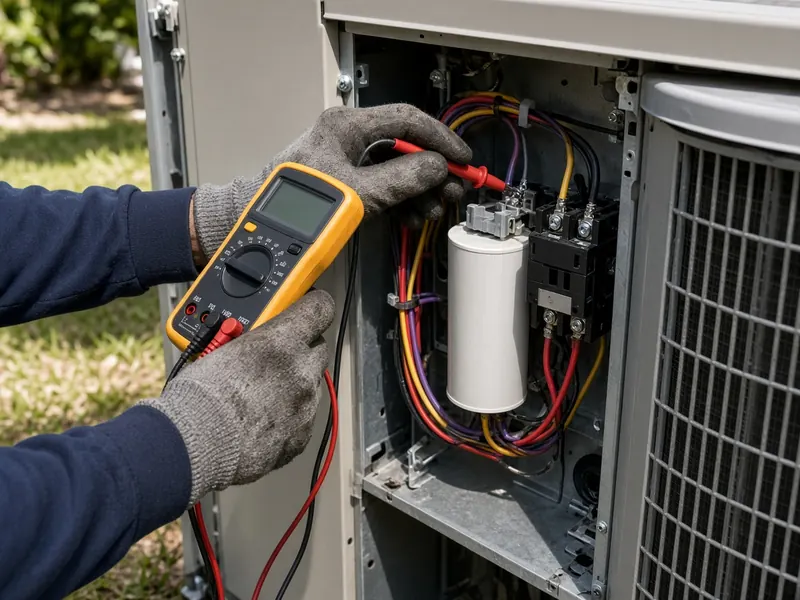
The outdoor section of a heat pump shares many electrical parts with an air conditioner, including the compressor and fan capacitors, the contactor and the fan motor. In winter those parts start more often because of defrost cycles, and a weak capacitor or worn contactor may fail first on a cold morning. If the outdoor fan stops while the compressor runs, the coil can ice quickly in heating mode.
Many heat pumps also have a crankcase heater or other cold-weather protection for the compressor, and some include high- and low-pressure switches that lock the system out to protect it. A lockout is a symptom, and the repair includes finding out what tripped it.
We start with what you have seen: ice, noises, aux heat readings and recent bills.
Thermostat configuration, reversing valve signal, outdoor lockout and board fault codes are verified.
The system is run in heating and cooling, with temperatures, pressures and current measured.
Triggering defrost confirms the board, sensor, valve and backup heat respond correctly.
We show you what failed, what it takes to correct it and the price, and nothing proceeds without your approval.
Repair a heat pump when the failure is a control, sensor, capacitor, motor or small leak on a system that is otherwise sound. Consider replacing it when the compressor or reversing valve fails on an older unit, when it uses R-22 and has a major leak, or when coils are corroded. Age, refrigerant and repair history decide most cases.
If a new system is the better path, our heat pump installation page covers sizing, HSPF2 ratings and backup heat planning.
If your heat pump is icing, leaning on aux heat or not keeping up, call before the next cold night. A diagnosis in heating mode shows exactly what has failed. Problems with heat strips, gas furnaces or the indoor heating controls are covered on our heating repair page.
Related Services
New systems sized for both seasons in Ocala.
Defrost and backup heat testing before winter.
Summer problems with the same equipment.
Repair and service for mini-split systems.
Service Areas
Our heat pump technicians cover Ocala, Summerfield, Silver Springs and neighborhoods including:
FAQ
Heat pump supply air is warm rather than hot and can feel cooler to the hand than furnace air, and it cools briefly during defrost. Air that stays cool for long periods points to a stuck reversing valve, low refrigerant, a defrost failure or thermostat wiring that has the system in the wrong mode. A heating-mode test identifies which.
Usually not. During defrost the outdoor coil warms quickly to melt frost, and on cold mornings the melting frost gives off a visible cloud of vapor while the fan is stopped. It should end within minutes. Smoke with a burning smell, or steam with grinding or buzzing noises, is different and needs prompt service.
Emergency heat can keep the house warm for as long as needed, because the strips are designed to heat on their own. The concern is cost, since strip heat uses much more electricity than the heat pump. Treat it as a bridge until the heat pump is repaired, and switch back once the technician confirms it is working.
Yes. A reversing valve stuck in the cooling position, a failed solenoid coil or a heating-only metering problem can leave cooling intact while heating stops. The reverse also happens. Because the two modes share most components but not all, a technician tests each mode separately to pin down the fault.
As outdoor temperatures fall, a heat pump’s heating output drops while the home’s heat loss rises, so long run times on the coldest nights are normal. Variable-speed models are designed to run for long periods at low output. Constant running in mild weather, or a house that never reaches the setpoint, suggests a problem.
No. Refrigerant circulates in a sealed loop and is not consumed. If a system needs refrigerant, it has a leak. Topping it off without finding the leak only delays the next failure, and repeated recharging of an older R-22 system becomes expensive as supplies of that refrigerant shrink.
Many heat pumps have a control board with a status light that flashes a code when a pressure switch, sensor or defrost fault occurs. The code meaning varies by manufacturer and is usually printed on a label inside the access panel. Note the pattern before resetting power, because that information helps the technician find the fault.
Mini-splits are heat pumps, so many concepts carry over, including defrost, refrigerant and sensor problems. Their inverter controls, communication wiring and indoor heads are different, though, and diagnosis relies heavily on the manufacturer’s error codes. Our ductless page covers those systems specifically.
Melt water from each defrost cycle drains out of the base of the outdoor unit, so some dripping is normal. Problems start when the pad has settled and water pools under the coil, or when it refreezes on a walkway. Leveling or raising the unit and keeping the base clear of debris usually solves it.
Cold weather increases heating hours and brings on backup strips, which use much more power than the heat pump. A spike that seems out of line with the weather can point to strips running too often, a defrost problem or a heat pump that is no longer carrying its share. The CEE homeowner guide lists a sudden jump in usage as a sign to call a professional.
Tell us what you are seeing, whether it is ice, aux heat or cool air, and we’ll test both modes and explain the repair before any work starts.
(352) 230‑9545