
AC Maintenance
Planned tune-ups that clean coils, clear drains and test the parts that fail most often.
Cooling Services
Warm air, a dripping air handler or an outdoor unit that hums and won’t start? We find the cause with measurements, not guesswork, and explain your options before any repair.
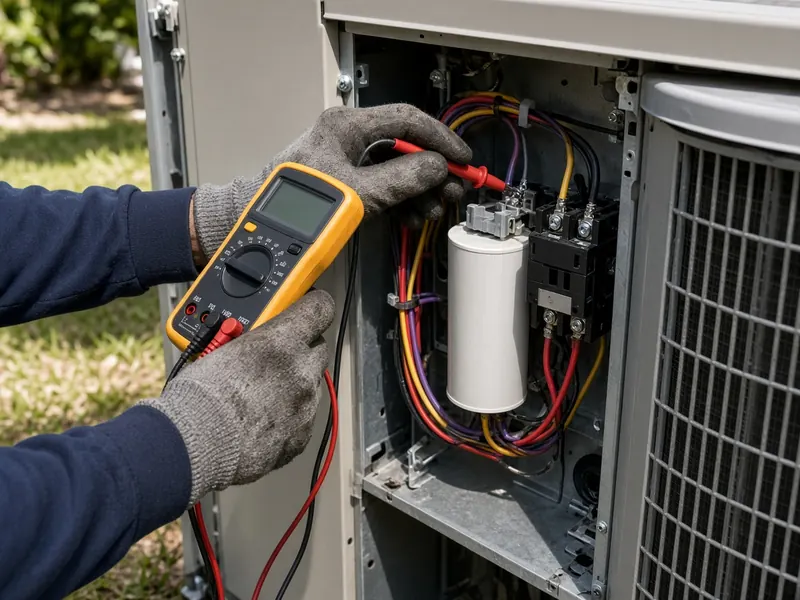
An air conditioner that quits on a July afternoon is more than an inconvenience. Indoor heat and humidity climb quickly, and older family members and pets feel it first. Ventis repairs residential air conditioners and heat pumps for homeowners in Ocala and across Marion County.
Good AC repair starts with an accurate diagnosis. A system that blows warm air could have a failed capacitor, a frozen coil, a refrigerant leak or a control problem, and each one calls for a different fix. Our approach is to test the system, identify why the failure happened and then walk you through the repair options and their costs.
This page explains the symptoms that usually point to a repair, the problems we see most often in Central Florida homes and how a diagnostic visit unfolds. It also covers the moment many homeowners eventually reach: deciding whether another repair still makes sense.
Some failures are obvious. Others creep in over weeks. Call for service if you notice any of the following:
Set the thermostat to Off and leave the breaker alone after a second trip. Continuing to run a system under these conditions can damage the compressor. Call (352) 230‑9545 to schedule a diagnostic visit.
The long cooling season, frequent storms and constant humidity tend to produce the same handful of repair calls year after year.
The capacitor gives the compressor and fan motor the boost they need to start. Heat and age weaken it, and the unit hums without starting.
This switch sends power to the outdoor unit. Burned contacts can stop the unit from starting or keep it running after the thermostat is satisfied.
Algae and sludge block the drain, water backs into the pan and a safety switch shuts the system off.
Low charge reduces cooling and can freeze the coil. The leak has to be located; topping off alone does not solve it.
A failing blower motor, a dirty coil or a collapsed duct leaves rooms warm and can lead to icing.
Loose low-voltage wiring, dead batteries or a faulty control board can make a healthy system look broken.
When the indoor fan runs but the air stays warm, the outdoor unit is usually not removing heat. The most common causes are a failed capacitor or contactor, a stopped condenser fan, a frozen evaporator coil, a badly clogged filter or a refrigerant leak. Each produces a different set of readings during testing.
A quick look outside narrows it down. If the outdoor fan is not spinning, an electrical part is the likely suspect. If the fan spins but the larger copper line feels warm, the compressor may not be running or the refrigerant charge may be low. If the larger line is coated in frost, airflow across the indoor coil is probably restricted. These observations help, but the technician still confirms the cause with meters and gauges before ordering parts.
Refrigerant is not used up the way fuel is. It circulates in a sealed loop, so a low charge almost always means a leak. Common leak points include the evaporator coil, flare and brazed joints, service valves and spots where a line rubs against a bracket or wall.
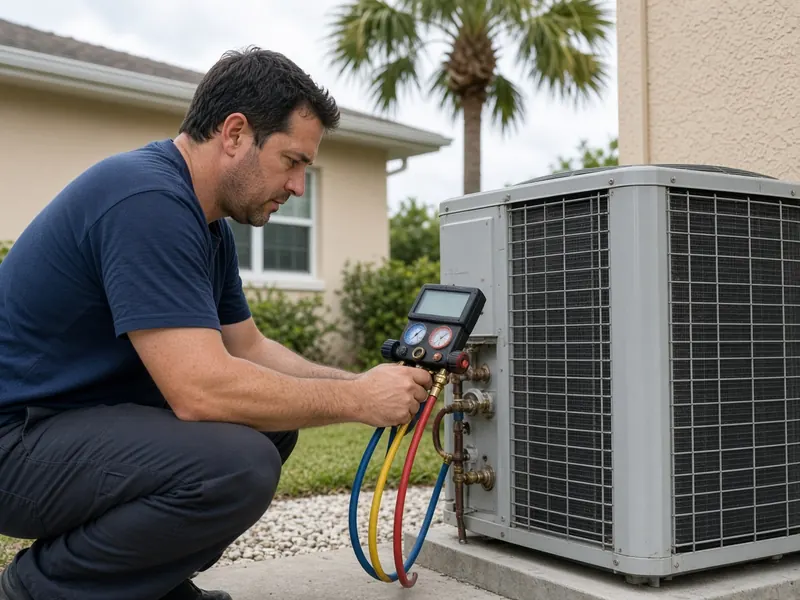
Technicians judge the charge by comparing pressures with line temperatures. Superheat describes how far the refrigerant vapor leaving the evaporator has warmed above its boiling point. Subcooling describes how far the liquid leaving the condenser has cooled below its condensing point. Readings outside the manufacturer’s targets point toward undercharge, overcharge, a restriction or an airflow problem.
According to the EPA, U.S. production and import of R-22 ended on January 1, 2020. Existing R-22 systems can still be serviced with recovered, reclaimed or previously produced refrigerant, but that supply is limited and costly. On an R-22 system with a major leak, it is worth discussing replacement before recharging.
Refrigerant work is regulated by the EPA and should only be done by a certified technician with recovery equipment.
The outdoor unit holds the parts most exposed to heat and power disturbances. Lightning and utility switching during summer storms can damage capacitors, contactors, fan motors and circuit boards.
The compressor is the pump that moves refrigerant through the system and the most expensive part to replace. Compressors often fail because of another problem: a weak capacitor that makes starting harder, a dirty condenser coil that drives up head pressure, or liquid refrigerant returning from a flooded coil. Before condemning a compressor, a careful technician checks winding resistance, start components and operating amperage to rule out a cheaper cause.
An evaporator coil freezes when its surface temperature falls below 32°F. That usually happens because not enough warm air is crossing the coil, or because a low refrigerant charge has pushed the coil temperature down.
Airflow causes include a clogged filter, a dirty coil face, blocked return grilles, a failing blower motor or a crushed duct in the attic. Once ice forms, it insulates the coil, cooling drops further and more ice builds. Turn the system off and let it thaw. Running the fan alone can speed thawing, but have the system checked before you return to cooling so the cause gets corrected rather than repeating.
On a humid day, a central air conditioner can pull a lot of water out of the air. That water drips into a pan under the coil and flows outside through a PVC drain line. Warm, wet and dark, that line is ideal for algae growth, and once it clogs the water has nowhere to go.
Attic and closet units usually have a float switch that cuts power when water rises, which protects ceilings and floors but leaves the house without cooling. A repair visit clears the line, confirms proper slope and trap, tests the float switch and checks the pan for rust or cracks. If the water comes from a thawing coil instead, the airflow or refrigerant problem behind the ice is the real repair.
Call (352) 230‑9545 or request service online. Details such as when it started and what you hear or see help us prepare.
The technician checks thermostat signals, voltage and amperage, capacitor values, refrigerant pressures and temperatures, airflow and the drain.
You hear what failed, why it likely failed and the repair options with their costs. Nothing is replaced without your approval.
After the repair, the system runs through a full cooling cycle while the technician checks temperature split and operating readings.
Repair is usually the better choice when the failed part is isolated and the rest of the system is in good shape. Replacement deserves a look when a major component fails on an older system, when repairs are becoming routine or when the unit uses R-22. Age alone does not decide it.
If replacement is on the table, our guide to choosing and installing a new air conditioner covers sizing, SEER2 ratings and what affects the price. Indoor-unit problems such as blower failures or a leaking coil have their own page on air handler repair.
Before you call, check two things: the thermostat is set to Cool below room temperature, and the filter is not clogged. Leave panels, wiring and refrigerant lines to a technician. Once the repair is done, regular preventive AC maintenance is the most practical way to catch worn capacitors, dirty coils and slow drains before they cause the next breakdown.
Related Services
Planned tune-ups that clean coils, clear drains and test the parts that fail most often.
Properly sized equipment when repairs no longer add up.
Indoor blower, coil and drain pan repairs.
Service for wall-mounted and ceiling cassette ductless systems.
Service Areas
We repair air conditioners in Ocala, Belleview, Summerfield, Silver Springs, Dunnellon and communities such as:
FAQ
A humming outdoor unit with a still fan most often points to a failed run capacitor, though a seized fan motor or a stuck contactor can cause the same symptom. Turn the system off, because the compressor can overheat trying to start. Do not push the fan blades with a stick, since the cabinet contains high-voltage parts.
A breaker that trips when the outdoor unit starts usually signals an electrical fault such as a shorted motor, a failing capacitor, a grounded compressor winding or damaged wiring. A worn breaker is another possibility. Reset it once at most. If it trips again, leave it off and schedule a diagnostic visit so the circuit can be tested safely.
Adding refrigerant without finding the leak is a short-term fix. The charge will drop again, the coil may freeze and the compressor can be damaged by running low. A proper repair locates the leak, repairs or replaces the leaking component and then charges the system to the manufacturer’s specification using superheat or subcooling readings.
Many drain lines have a capped vent tee near the indoor unit. Homeowners can carefully pour a cup of plain water into it to see whether the line flows. If water backs up, the line needs to be cleared with suction from outside or professional cleaning. Avoid harsh chemicals, which can damage the pan, and call if the float switch keeps shutting the system off.
Yes. Nearby lightning strikes and power surges can damage capacitors, contactors, control boards and the compressor. If the system stops working after a storm, check the breaker and thermostat first. If those look normal, schedule service. A technician can test the electrical parts and discuss whether a surge protector makes sense for your equipment.
The cost depends on what failed, the part price for your equipment brand, how accessible the unit is and whether refrigerant work is needed. A capacitor replacement and a coil leak repair are very different jobs. After diagnosis, you receive the repair price before any work starts, so you can decide whether to proceed.
Short cycling means the system turns on and off every few minutes. Common causes include an oversized system, a thermostat placed near a supply vent or in sunlight, a frozen coil, a high-pressure or low-pressure safety switch tripping, or an electrical fault. Short cycling wears parts quickly and hurts humidity control, so it is worth having diagnosed.
Yes, R-22 systems can still be serviced. U.S. production and import of R-22 ended in 2020, so repairs rely on recovered, reclaimed or previously produced refrigerant, which keeps costs high. Electrical and drain repairs are unaffected. For a large leak, compare the repair cost with replacement before deciding.
Confirm the thermostat is set to Cool with a set point below room temperature and has working batteries. Check that the filter is not clogged and that the breakers for the indoor and outdoor units are on. Look for water around the indoor unit. If none of those explains the problem, schedule a technician.
Tell us what your system is doing and we’ll send a technician to test it, explain the cause and lay out your repair options.
(352) 230‑9545