
System Replacement
Options for first-phase homes whose original equipment is aging out.
55+ Community Service
Stone Creek homes range from first-phase houses built around 2006 to sections still under construction. That timeline shapes nearly every cooling and heating decision you make here.
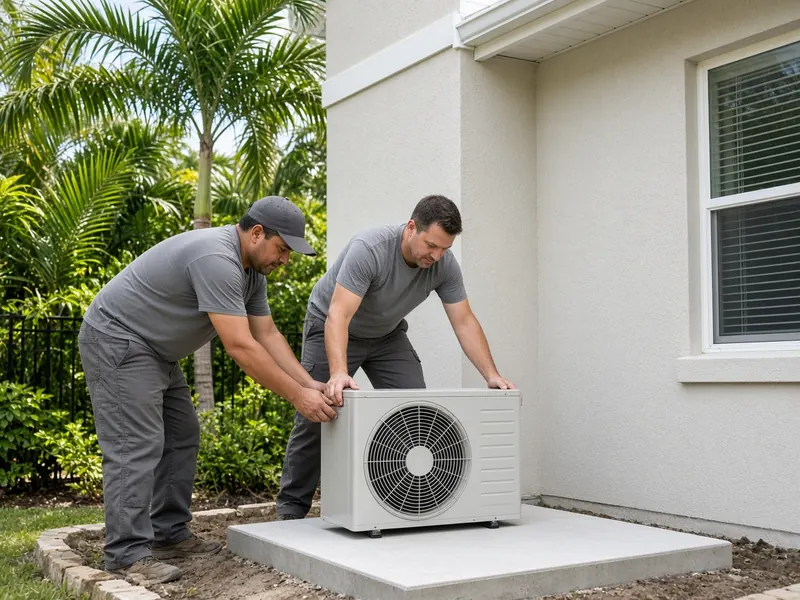
Ventis repairs, maintains and replaces air conditioning and heating systems in Del Webb Stone Creek, the gated, age-restricted 55+ community built by Del Webb in southwest Ocala.
Stone Creek opened in 2006 and has kept growing, with plans for up to about 3,800 homes. The mix runs from attached villas to larger single-family estate homes, and the community is built around the 29-acre Reflection Bay amenity area and an 18-hole golf course designed by Terry Doss. For an HVAC company, the most useful fact about Stone Creek is its timeline: the earliest homes now have systems approaching or past 18 years old, while newer phases have equipment that is still on its first set of filters.
Original systems from the community’s opening years are now at the age when replacement starts coming up during routine service visits. A system installed around 2006 to 2010 was likely charged with R-22 or was one of the early R-410A systems, and either way it was built to efficiency standards that have since been raised twice. If yours is in that age range, a repair still makes sense for minor failures, but a major one is the right moment to compare costs.
What we look at in these homes:
Villas are attached homes that share a wall, so they usually need less cooling capacity than a detached estate home of similar size, and their outdoor units sit closer to a neighbor’s. Single-family homes are larger and more varied, so sizing depends on square footage, window area and any enclosed lanai. In both cases we calculate the load rather than assume one.
Our AC installation page explains how that sizing works and what changes with current efficiency rules. If you are leaning toward a single system that handles both seasons, see our heat pump installation page.
If your home is from a more recent phase, the work is mostly preventive. New systems fail early for a few predictable reasons: a construction-dust filter that never got changed, a condensate line that was never flushed, or a refrigerant charge that was set before the house was finished. A first maintenance visit catches these early. Keep your builder documents and the equipment model and serial numbers in one place, because warranty claims usually need them.
Typical help we provide in newer homes:
Many Stone Creek homes use heat pumps or air handlers with electric heat strips. When cold air comes from the vents in January, the cause can be the heat pump itself, a defrost problem or backup heat that has stopped working. Our heat pump repair page covers the outdoor unit side, and our AC repair page covers summer failures such as warm air, ice on the lines and tripped breakers.
Stone Creek is gated, so when you book a visit we ask how the community handles service vendors so the technician arrives with the right information. If a replacement would move or enlarge equipment that is visible from the street, check with the homeowners association before the work is scheduled. We do not assume any particular rule; we simply recommend asking first.
Services
Options for first-phase homes whose original equipment is aging out.
Defrost, reversing valve and outdoor unit diagnostics.
Coils, drain pans and blower motors on the indoor unit.
Fall checks on heat strips, controls and safety switches.
Service Areas
Stone Creek neighbors along the SW 80th Street and SR 200 corridor that we also serve include:
FAQ
Not automatically. If the system cools well and has not needed major repairs, maintenance can keep it going. The time to decide is when a large repair comes up, such as a compressor or coil. At that point we show you the repair price next to replacement so you can compare them directly.
Usually a clogged condensate drain, a cracked or rusted drain pan, or a float switch that tripped and stopped the system. In homes from the early phases, pan corrosion becomes more likely with age. Turn the system off if water is spreading and call us so we can clear the drain and check the pan.
Often, yes. A villa shares a wall with the next home, so it gains less heat through that side. Size still depends on the floor area, windows and insulation, so we run a load calculation instead of guessing. Oversizing a villa system can leave the air feeling damp even when it is cool.
We can diagnose the problem and tell you what we find. If the failed part is under the manufacturer’s warranty, the part may be covered while labor depends on the terms. Check your builder and manufacturer paperwork first, and have your model and serial numbers ready when you call.
If the outdoor unit does not run when the heat is on, the heat pump is the likely problem. If it runs normally but the house struggles on very cold mornings, the electric backup heat may have failed. A technician tests each stage separately to confirm which one needs repair.
A replacement in the same spot is usually the simplest case, but check with the Stone Creek homeowners association before work if the new unit will be larger, sit in a new location or need a different pad. We can give you the equipment dimensions to include with that request.
Plan on a spring cooling visit and a fall heating visit. In between, change the filter on schedule. Homes in active construction areas may need filter changes more often, since dust from nearby building sites can load a filter faster than normal.
Any new central system installed here must meet the current federal minimum for the Southeast. Higher ratings lower operating costs, but the gain depends on how many hours the system runs. We show the price difference between efficiency levels and the estimated savings so you can choose.
Let us know which phase your home is in and what the system is doing. We will diagnose the cause and explain your options before any work begins.
(352) 230‑9545