
Central Air
Ducted whole-home cooling for homes with usable ductwork.
Cooling Services
Cooling for the rooms your ductwork can’t reach, from a converted garage to a glassed-in Florida room, plus repair and cleaning for the mini-splits you already own.

A ductless mini-split cools a room or zone directly, without a duct system. Ventis designs, installs, repairs and maintains mini-split systems for homeowners in Ocala and the wider Marion County area.
Mini-splits shine in specific situations: a new addition, an enclosed porch, a workshop or a home built without ducts. They also have real limitations, especially around humidity control and cost per room, so they are not automatically the best choice. This page covers both sides so you can decide whether ductless fits your project.
A mini-split has an outdoor unit with an inverter-driven compressor and one or more indoor units, often called heads, mounted in the rooms they serve. A small bundle of refrigerant lines, a control cable and a condensate drain runs through a hole in the wall to connect them. Each indoor head has its own fan, coil and filter and blows air directly into the room.
Because the compressor speed varies, the system can slow down as a room approaches its set point instead of cycling fully on and off. Most mini-splits sold today are heat pumps, so they also provide heat during Ocala’s short winter.
The wall-mounted head is the most familiar style, but it is not the only one. Ceiling cassettes sit flush in the ceiling and spread air in several directions. Floor consoles suit rooms with low walls or large windows. Slim ducted units hide in a soffit or attic space and serve one or two nearby rooms through short duct runs. Each style has different installation and drainage needs.
Multi-zone systems are convenient, but if every head is oversized for a small room, the system short cycles. Sometimes two single-zone systems serve a home better than one multi-zone unit.
Extending existing ductwork to a new room only works if the current system has spare capacity and the ducts can reach. Many central systems are sized for the original house, and adding a room can leave both the new space and the rest of the home short. A dedicated mini-split for the addition avoids overloading the existing system and gives the new room its own control. If you are building a larger project from the ground up, our new home HVAC installation page covers whole-house design.
Glass-heavy rooms gain a lot of heat in the afternoon sun. The load for these spaces needs to be calculated carefully, because guessing based on floor area often leads to a unit that struggles on summer afternoons or one that is too large to control humidity the rest of the day.
Building codes generally do not allow a home’s central return to draw air from a garage, which makes a separate system the usual way to cool one. Insulating the garage door and attic above it makes a big difference in how well a mini-split can keep up.
Enclosed lanais, in-law suites and former carports often lack ducts. A mini-split can make these rooms usable year-round without opening walls and ceilings to run new ductwork.
Some older homes, cottages and block homes were never built with ducts. For these, a multi-zone or several single-zone mini-splits can provide cooling without major construction. The Department of Energy’s home cooling guidance notes that ductless systems are easy to install and avoid the energy losses associated with ductwork.
The same guidance points out the cost side: in homes that already have ductwork, a mini-split can cost about 30 percent more than adding an air conditioner to the existing system. If your home already has usable ducts, ducted central air may be the better value.
Yes, when they are sized and applied correctly. Mini-splits cool efficiently and allow room-by-room control. Their main weakness in Florida is moisture: the Building America Solution Center notes that ductless systems generally provide poorer dehumidification in cooling mode and less air filtration than ducted systems. Correct sizing and a dry-mode setting help.
An oversized head in a small room cools the air quickly and stops removing moisture, leaving the room cool but damp. For whole-home use, ventilation and humidity need a plan, which might include a dedicated dehumidifier.
Because each head operates independently, you can cool the rooms you are using and set back the ones you are not. With no ducts in a hot attic, there are no duct leakage or attic heat-gain losses on the ductless portion of the system. Inverter compressors also avoid some of the start-and-stop losses of single-stage equipment.
Real savings depend on how the system is used, how well it is sized and how much of the home it serves. A head that runs constantly to cool an uninsulated space will not deliver the efficiency printed on its label.
Each space gets a load calculation, and heads are placed where they can reach the whole room without blowing on occupants.
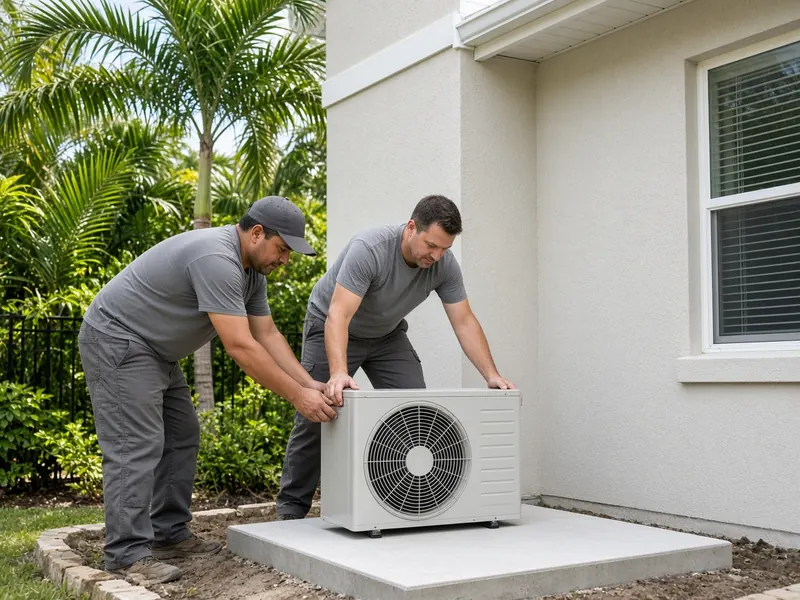
The condenser is set on a level pad or bracket with clearance for airflow and service and away from bedroom windows where possible.
Lines are flared or brazed to spec, pressure tested and evacuated, and the condensate drain is routed with a steady slope or a pump.
A dedicated circuit and disconnect are installed, the system is charged to specification and each head is tested.
A clogged drain, failed condensate pump or poorly sloped line lets water spill from the indoor unit.
Dirty filters and a coated blower wheel reduce airflow and can produce musty smells.
Sensor, communication or inverter board faults show up as blinking lights or codes on the head.
Improperly made flare connections can leak refrigerant slowly and reduce cooling over time.
Mini-split indoor heads need regular attention. Their filters are small and should be rinsed often during heavy use. Over time, dust and moisture build up on the coil and blower wheel, and a deep cleaning that removes that buildup can restore airflow and help with odors. Outdoor units need the same coil care and electrical checks as any condenser. If you have central and ductless systems, both can be covered under one AC maintenance plan.
Repairs follow the manufacturer’s diagnostic codes plus electrical and refrigerant testing. Many problems involve communication between the indoor and outdoor boards, sensors or the condensate drain rather than the compressor itself.
Appearance matters too. Line sets can be run inside walls in some construction, or along the exterior in a painted line-hide cover that keeps them protected from sun and lawn equipment. Those choices affect labor and are worth settling during the estimate rather than on installation day.
A useful mini-split estimate starts with the room itself: its size, windows, insulation, how it is used and where the outdoor unit can go. We measure, calculate the load and then recommend single-zone or multi-zone equipment with head styles that suit the space. If a central system or a duct extension would serve you better, we will tell you that as well.
Have photos of the room and the nearest exterior wall handy if you call first. It helps us understand the project before the visit.
Related Services
Ducted whole-home cooling for homes with usable ductwork.
Replacing an aging central system with properly sized equipment.
HVAC planning for new homes and major additions.
Diagnostics for ducted systems that have stopped cooling.
Service Areas
Additions, enclosed porches and workshops exist in every corner of the county. Mini-split installation and repair is available in places like:
FAQ
It can, using several indoor heads or multiple systems, but whole-home ductless design takes careful planning. Rooms without a head, such as closets and small bedrooms, may not stay comfortable, and humidity control needs attention in Florida. For homes with usable ductwork, a central system is often simpler. A load calculation for each room shows what will work.
They remove moisture while cooling, but generally less effectively than a well-designed ducted system. Oversized heads make the problem worse by satisfying the set point quickly. Correct sizing, a dry-mode setting and, for larger areas, a separate dehumidifier help. If a room already has moisture problems, discuss them before choosing equipment.
Each manufacturer publishes maximum and minimum line lengths and height differences for its models. Exceeding them can reduce capacity or require extra refrigerant. In most homes, the outdoor unit is placed on the wall closest to the indoor head to keep the line set short, neat and easy to protect.
Check and rinse the washable filters behind the front panel about once a month during heavy cooling, or more often in dusty spaces like garages. Let them dry fully before reinstalling. A professional cleaning of the coil, blower wheel and drain pan is also needed periodically, since the filter cannot stop all buildup.
Indoor heads use blinking lights or codes to report problems with sensors, communication between units, the condensate system, inverter boards or refrigerant temperatures. The code points a technician toward the right test, but it does not replace diagnosis. Note the code and pattern before you call, and turn the unit off if water or odors appear.
Often, yes. Codes generally prevent connecting a garage to the home’s central return, so a separate system is the usual approach. Results depend heavily on insulation, especially the garage door and ceiling. Without it, a mini-split may run constantly in summer. A load calculation shows the capacity needed for your garage as it is or after upgrades.
Most mini-splits are heat pumps, so they both cool and heat. In Central Florida’s mild winters, that is usually enough to keep a room comfortable. Some models are cooling only, so confirm the model type on your estimate if heating matters for the space.
Price depends on the number of zones, the style and capacity of each head, efficiency, line set length and routing, electrical work, wall type and drainage. A single-zone system for one room and a multi-zone system for several rooms are very different projects. We provide a written estimate after visiting the home.
Planning an addition or trying to cool a hard-to-reach room? Talk with us about whether a mini-split is the right fit.
(352) 230‑9545