
Air Handlers
The indoor half of a heat pump system, including backup heat.
Heating Services
One system for August afternoons and January mornings. We size heat pumps from your home’s loads, plan the backup heat and set the controls so the strips stay off until they are really needed.
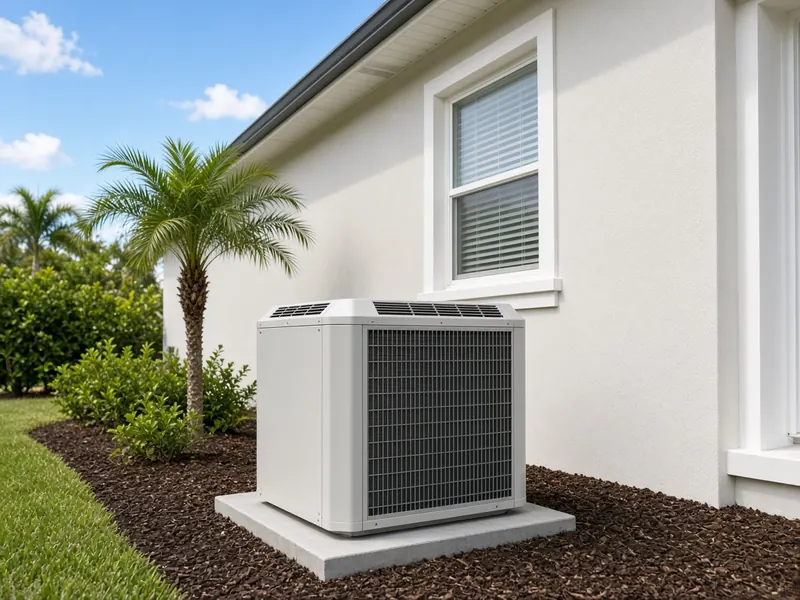
Ventis installs residential heat pumps in Ocala and across Marion County, replacing worn heat pumps and converting homes from electric furnaces or gas heat. Because a heat pump both heats and cools, the installation has to serve a long, humid summer and a short winter with the occasional hard freeze.
The cooling side of a new system follows the same principles as any central air installation, which our AC installation and replacement page covers in detail. This page focuses on what is specific to heat pumps: heating ratings, how the code sizes them, backup heat planning, defrost and the details of the outdoor installation that affect winter performance.
A heat pump suits Ocala because most winter hours here are mild, which is where heat pumps heat most efficiently. Instead of burning fuel or running resistance elements, it moves heat from outdoor air into the house; ENERGY STAR says it can deliver up to three times as much heat energy as the electricity it consumes. The same outdoor unit then handles the long cooling season.
Florida Climate Center normals for Ocala show January averaging a 45.6°F low and a 70.6°F high, with annual heating degree days at about a quarter of cooling degree days. That balance means cooling capacity drives the equipment choice, and the heating plan focuses on covering the few cold nights without leaning on expensive strip heat the rest of the winter.
Heat pumps carry two efficiency ratings. SEER2 measures cooling over a season and HSPF2 measures heating over a season, both under the federal test procedure that took effect in 2023. The Department of Energy says the new metrics are designed to better reflect real-world installation and use, and that they are not directly comparable with the older HSPF and SEER ratings on previous equipment.
Department of Energy standards require split-system heat pumps manufactured on or after January 1, 2023 to meet at least 14.3 SEER2 and 7.5 HSPF2 nationwide. Single-package heat pumps have their own minimums of 13.4 SEER2 and 6.7 HSPF2.
Because Ocala homes cool far more than they heat, SEER2 usually has the larger effect on annual operating cost. HSPF2 still matters for winter bills, and the way backup heat is controlled can matter as much as the rating itself.
Florida’s energy code requires a Manual J load calculation and Manual S equipment selection for new and replacement systems. For heat pumps, Section R403.7.1.2.1 of the 2023 code ties the size to the cooling load: total cooling capacity may not exceed 1.15 times the design cooling load, even when the heating load is larger. Oversizing for winter would leave the home with a system that short-cycles and dehumidifies poorly all summer.
The result is a heat pump matched to summer, with any winter shortfall on the coldest nights covered by backup heat. The load calculation tells us how large that gap is at Ocala’s design temperature, which is how the backup is sized.
In most local heat pump systems, backup comes from resistance strips mounted in the air handler. They run during defrost to temper the air and help on nights when the heat pump alone cannot hold the setpoint. Choosing the strip size means weighing comfort during an unusual freeze against breaker and wire size, the home’s electrical service and the cost of running strips.
Section R403.1.3 of the Florida energy code requires controls that allow electric backup only while defrosting, when something has malfunctioned or when the heat pump by itself can’t reach the setpoint. We set up the thermostat staging, and where appropriate an outdoor temperature lockout, so the strips do not come on simply because the thermostat was raised a few degrees in the morning.
Homes with gas service can use a furnace instead of strips in a dual fuel arrangement. Our heating system installation page compares dual fuel with all-electric options.
Single-stage heat pumps run at full output or not at all. Two-stage models add a lower setting for mild weather. Variable-speed, or inverter, heat pumps adjust output across a wide range, running long and gently on a 60°F morning and ramping up as it gets colder.
In heating, variable-speed equipment tends to hold steadier indoor temperatures and lean less on strips during recovery, because the compressor can speed up instead of calling for backup. The trade-offs are higher equipment cost and more complex controls, which often need a matched communicating thermostat. We explain how each option would behave in your home rather than assuming the top model fits everyone.
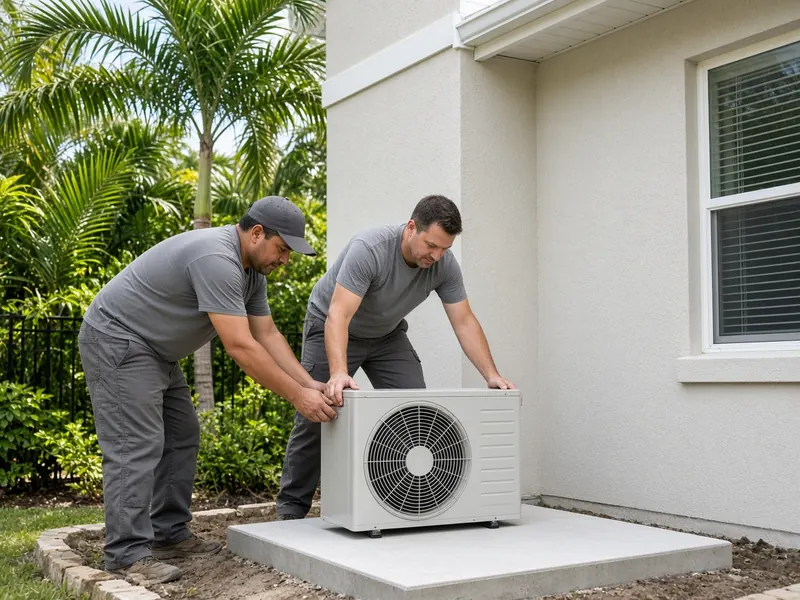
A heat pump outdoor unit sheds water every time it defrosts, so where it sits matters more than with a cooling-only condenser. It needs a level pad high enough for melt water to drain away, clearance on all sides for airflow and a location out from under roof edges that dump rain onto the coil. The CEE homeowner guide also advises making sure defrost water does not pool and refreeze on walkways.
Line sets are insulated and protected from sun damage, and the electrical disconnect is placed where it can be reached for service. These details cost little during installation and prevent icing and service problems later.
Backup strips draw a large electrical load of their own. Before the equipment is ordered, we confirm the panel has room for the air handler’s heat kit and the outdoor unit, that breaker and wire sizes match the nameplates and that the strips are split into stages. On older homes, that check sometimes shows the panel needs attention first.
Switching from an air conditioner with an electric furnace to a heat pump usually means replacing the outdoor unit and the indoor air handler together, keeping the electric strips as backup. Heating costs often drop because the heat pump replaces most hours of resistance heat.
Converting from a gas furnace involves removing or capping the gas connection at the appliance, installing an air handler and confirming the electrical service can carry its backup heat. Existing ductwork can often be reused, though return size and leakage should be checked. If the home keeps other gas appliances, carbon monoxide alarms remain important.
Under EPA’s Technology Transitions rule, a new residential split heat pump charged with a refrigerant rated at 700 GWP or higher can be installed only if its components were built or imported before 2025. Manufacturers have shifted to options such as R-32 and R-454B, both listed as acceptable by EPA’s SNAP program and both classed A2L, meaning mildly flammable, with added handling rules for installers.
The outdoor unit, indoor coil or air handler and metering device should be a combination the manufacturer has rated together so the system reaches its listed SEER2 and HSPF2. Mixing a new outdoor unit with an old indoor coil rarely makes sense with the refrigerant change.
We calculate heating and cooling loads and inspect the ducts, electrical service and outdoor location.
You review matched heat pump options, staging and backup heat size with their trade-offs.
The outdoor unit, air handler and line set are installed, wired and sealed, with drainage built for both seasons.
We verify charge, airflow and temperatures in cooling and heating and run a forced defrost.
We set the thermostat staging and show you what heat, aux and emergency heat mean on your thermostat.
A heat pump estimate starts with a visit, because the right size and backup heat depend on your home, not just its square footage. We provide a written proposal that explains the equipment, ratings and installation scope. If your current heat pump might still be repairable, our heat pump repair page explains how we make that call.
Related Services
The indoor half of a heat pump system, including backup heat.
Room-by-room heating and cooling without ducts.
Fall and spring visits to keep both modes ready.
Heat pump design for homes being built.
Service Areas
Homeowners from Dunnellon to Summerfield call us about new heat pumps, in places like:
FAQ
Yes, with a properly sized backup. A heat pump’s output falls as outdoor temperatures drop, so on the coldest nights the strips or a dual fuel furnace make up the difference. The load calculation estimates how much backup your home needs at the local design temperature, so the system stays comfortable without oversizing the outdoor unit.
No. When it cools, a heat pump runs the same refrigeration cycle as an air conditioner, and its SEER2 rating comes from the same test. A heat pump and an air conditioner with similar SEER2 ratings use similar energy for cooling. The difference is that the heat pump can also provide efficient heat in winter.
The thermostat has to support heat pump operation with auxiliary and emergency heat, and some variable-speed systems require the manufacturer’s communicating control. An older single-stage thermostat may not work. We confirm compatibility in the estimate and set up the staging during installation so backup heat runs only when it should.
Cold-climate models are designed for regions where winters regularly drop below freezing, which ENERGY STAR describes as the case for considering them. Ocala freezes only occasionally, so a standard heat pump with appropriate backup is usually sufficient. A variable-speed unit can still be worth it for comfort and summer humidity control.
Often, if the ducts are sound, sealed and sized for the airflow the new system needs. Heat pumps typically move a lot of air at moderate temperatures, so undersized returns or leaky attic ducts reduce comfort in both seasons. We inspect the ducts during the estimate and tell you whether repairs or changes are worth making.
Yes. Most ductless mini-splits are heat pumps that heat and cool individual rooms or zones. They suit additions, converted garages and homes without ducts, and they defrost the same way a ducted heat pump does. Our ductless mini-split page explains when a ductless system is the better choice for part or all of a home.
Not at the federal level for new installs. The IRS says the Energy Efficient Home Improvement Credit ended with improvements made by December 31, 2025. Some utilities offer their own incentives, and programs change. Check with your electric provider before you buy, and confirm any tax questions with a tax professional.
Plan on a cooling-season visit in spring and a heating-season visit in fall, along with monthly filter checks and keeping the outdoor unit clear. Some manufacturers set their own service intervals or documentation requirements, so ask what your specific model calls for when the system is installed.
Yes. Manufactured homes can use a split heat pump with an indoor air handler or a packaged heat pump that sits outside and connects to the floor ducts. The choice depends on the existing ductwork, the closet space and the home’s electrical service, so we survey the setup before recommending equipment.
Sound levels vary by model and are usually listed in the manufacturer’s specifications. Variable-speed units are generally quieter at low speed. Placement matters too: keeping the unit away from bedroom windows and hard reflecting walls reduces noise indoors, and a brief whoosh during defrost is normal for every heat pump.
Book an in-home visit and we’ll size a heat pump for your home, plan the backup heat and walk you through the options in writing.
(352) 230‑9545