
Heat Pump Repair
Outdoor unit, reversing valve and defrost diagnostics.
Heating Services
Cold air from the vents, a breaker that will not stay on or a furnace that clicks and quits? We trace heating failures to their cause and explain the fix before we make it.
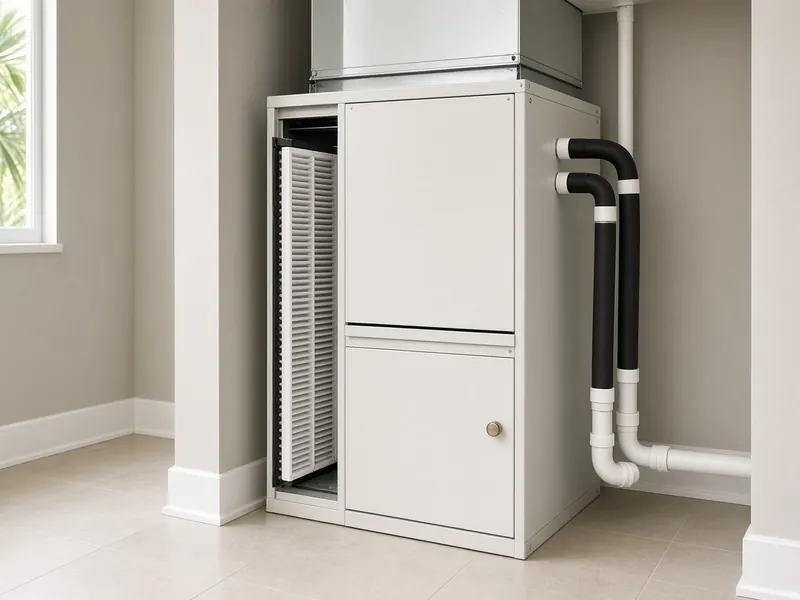
Ventis repairs residential heating systems across Ocala and Marion County, including electric furnaces, air handler heat strips, gas furnaces and the thermostats and controls that run them. When the heat fails on a cold night, the goal is a safe, lasting repair rather than a reset that buys a day or two.
Heating problems in this area often surface all at once. Equipment that sat unused from April to December gets called on during the first cold front, and parts that weakened quietly over the summer, such as relays, igniters and limit switches, finally give out. This page covers the failures we diagnose most often in electric and gas heating equipment. Problems specific to the outdoor unit, the reversing valve or the defrost cycle are covered on our heat pump repair page.
Get everyone outside, call 911 from outdoors and do not go back in until responders say it is safe. Turn off the furnace only if you can do so on the way out. Once the home is cleared, call (352) 230‑9545 so the furnace and venting can be inspected before the heat is used again.
Cold air on a heating call usually comes from one of four things: a thermostat set to the wrong mode or with the fan set to On, backup heat that has lost power at its breaker, a failed heating component such as a sequencer, relay or igniter, or a heat pump that has stopped heating or is in a normal defrost cycle. Checking the thermostat and breakers first rules out the simple causes.
With heat pump systems, a few minutes of cooler air during defrost is expected, and supply air from a heat pump often feels less hot to the hand than air from a furnace even when it is working correctly. Air that stays cool for long stretches, or a system that never reaches the set temperature, needs a technician to measure supply temperatures, amperage on each heating stage and the refrigerant side of the system.
Many Marion County homes without gas heat use electric resistance elements, either as the main source in an electric furnace or as backup in a heat pump air handler. Each element is controlled by a sequencer or relay that brings the stages on one at a time, so the electrical service is not hit with the full load at once. Overheat protection comes from limit switches and thermal fuses that open if airflow drops or the element runs too hot.
The usual failures are a sequencer that no longer closes, an element that has burned open, a limit switch that has worn out after years of cycling or a wire lug that has loosened and overheated. A technician measures current on each stage to see which elements are actually producing heat, then traces the circuit back to the failed part.
A breaker trips when it sees more current than it is rated for or heat at a failing connection. Shorted elements, a damaged wire or a worn breaker are common causes. Repeatedly resetting it can hide a connection that is overheating inside the cabinet, so the circuit should be checked with the power off before the strips are used again.
A modern gas furnace follows a set sequence each time it starts: the inducer fan clears the heat exchanger, a pressure switch proves that venting is working, the igniter heats, the gas valve opens and a flame sensor confirms the burners lit. If any step fails, the control board stops the sequence and, after several tries, locks the furnace out. The pattern of blinking lights on the board points a technician toward the failed step.
Dirty flame sensors, cracked hot surface igniters, blocked condensate drains on high-efficiency furnaces and pressure switch faults caused by restricted vent pipes account for a large share of no-heat calls. Less often, the inducer motor or the gas valve itself fails.
Rollout switches, high-limit switches and pressure switches shut the furnace down when flame, heat or venting is not where it should be. Bypassing one to get heat back is dangerous. When a safety switch has tripped, the repair includes finding out why, which can mean inspecting the heat exchanger, flue and combustion air supply.
Carbon monoxide is colorless and odorless, so you cannot detect it without an alarm. The EPA lists leaking furnaces and chimneys, back-drafting appliances and flues that are blocked, disconnected or improperly sized among its sources, and notes that early symptoms such as headaches, dizziness and nausea can resemble the flu and ease after leaving home.
During a gas furnace repair we look at the venting, the burner flame and the condition of the heat exchanger where it is accessible, along with the repaired component. If you have gas appliances and no CO alarm, adding one near the sleeping areas is a simple, inexpensive safeguard.
Many “no heat” calls turn out to be control problems. A new thermostat configured for the wrong equipment type can call for cooling when it should call for heat, or never energize the backup stage. Heat pump systems rely on a reversing valve signal, and if that wire is swapped or loose, the system runs backward.
Inside the indoor unit, a failed transformer, a blown low-voltage fuse or a faulty control board can leave the whole system dark. Wiring chewed by pests in attics and garages is another source of intermittent faults. Control diagnosis is about tracing the 24-volt signal from the thermostat to each component until the break is found.
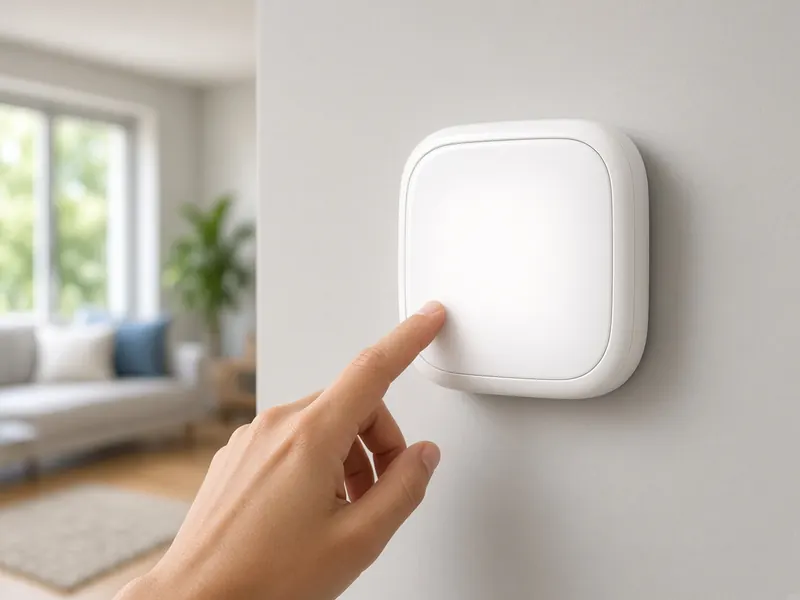
Heating equipment depends on steady airflow to carry heat away. When a filter clogs, a blower slows or too many registers are closed, heat builds up at the strips or heat exchanger until a limit switch opens. The system then cycles on and off in short bursts and never catches up.
Duct leaks matter in winter too. Supply ducts in an unconditioned attic lose heat on cold nights, and return leaks pull in chilly air. Restoring airflow often fixes what looks like a heating failure. Because the same blower and ducts also serve the summer, our air handler service page covers blower and cabinet problems in more depth.
Call (352) 230-9545 and describe the symptoms, the type of system and when the problem started.
On gas systems we check for combustion and venting issues before running the equipment.
We read board codes, measure voltage and current on each heating stage and test the controls and airflow.
You get the cause, the repair options and their costs before any work begins.
After the repair, we run a full heating cycle and confirm temperatures, current draw and safety controls.
Most heating failures are worth repairing. Replacement comes into the conversation when the problem is serious, the equipment is old or the same system has needed several repairs in a short span.
If replacement makes sense, our page on heating system installation explains how to choose between a heat pump, electric furnace and gas furnace.
If your heat is not working or is behaving strangely, call before the next cold night. A clear diagnosis tells you whether the fix is small or whether the system needs a bigger decision. Once it is running again, a fall heating maintenance visit each year helps catch weak parts early.
Related Services
Outdoor unit, reversing valve and defrost diagnostics.
Options for homes whose heating equipment has reached its limit.
Fall inspections of strips, burners and safety controls.
Blower, coil and cabinet work on the indoor unit.
Service Areas
Homes in Ocala, Belleview, Silver Springs and Dunnellon call on us when the heat quits, including in neighborhoods like:
FAQ
Short cycling during heating often means a limit switch is opening because heat is not being carried away, usually from a dirty filter, weak blower or closed registers. It can also come from a flame sensor that cannot prove the flame on a gas furnace, a thermostat in a poor location or equipment that is oversized for the home.
Turning the power off and on will often clear a lockout once, but the furnace locked out for a reason, such as failed ignition or a venting fault. If it locks out again, leave it off and call for service. Never bypass a safety switch or keep cycling a furnace that smells of gas or exhaust.
Backup heat usually comes in stages, each with its own element, relay or sequencer and sometimes its own breaker. If one stage fails, the house still gets some heat but warms slowly on cold nights. Measuring the current on each stage shows which element, control or circuit has dropped out so it can be replaced.
Yes. Leave the house without operating switches or anything that could spark, and call your gas utility or 911 from outside. Do not return until the leak is cleared. Once the gas supply is made safe, the furnace, connector and valve should be inspected before the heat is turned back on.
The flame sensor is a thin metal rod that confirms the burners are lit. If it does not detect a flame within a few seconds, the control closes the gas valve. Over time a coating builds up on the rod and weakens the signal, causing the burners to light and then shut off. Cleaning or replacing it is usually simple.
Leaky attic ducts, a disconnected supply run, weak airflow or a heating stage that has dropped out can all leave rooms short of heat even while the system runs. Drafty windows and doors add to it. Measuring supply temperatures and airflow at several registers helps separate an equipment problem from a duct or building issue.
If the outdoor unit is not running when the thermostat calls for heat, or runs but the air stays cool, the heat pump side is the likely cause. If the outdoor unit runs normally but the house struggles on cold nights, the backup strips may have failed. A technician confirms which by testing both stages separately.
Often the two share the same blower, controls and ductwork, so a repair to those parts serves both seasons. Work on heat strips or furnace burners does not affect cooling directly. If we see something on the cooling side while we are there, such as a slow drain or worn capacitor, we point it out rather than leaving it for summer.
Electric space heaters can bridge a night or two if used carefully: keep them away from bedding and curtains, plug them directly into a wall outlet and never leave them running unattended or while sleeping. Never use a grill, generator or gas oven indoors for heat, since those can produce dangerous carbon monoxide.
Let us know the symptoms and the type of heat you have. A technician will test the system, pinpoint the failure and review the repair with you first.
(352) 230‑9545