
Central Air Conditioning
How split and packaged systems cool the whole house through ductwork.
Cooling Services
A new air conditioner is a long-term purchase. We size it from your home’s actual cooling load, explain the efficiency choices in plain terms and install it to the manufacturer’s specifications.
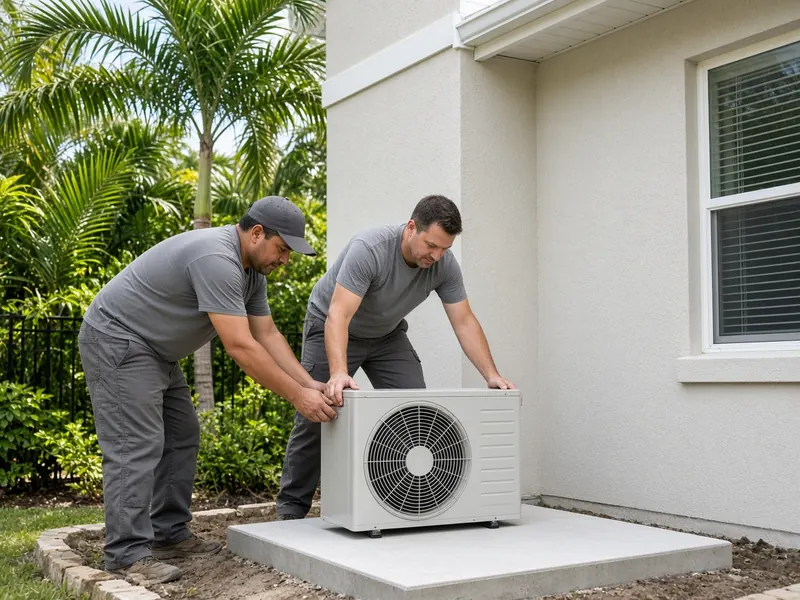
From single-story block homes in Ocala to newer houses in Marion County’s planned communities, Ventis installs and replaces central air conditioners and heat pumps. The goal of every replacement is simple: equipment that fits the house, removes humidity well and runs efficiently for its full service life.
Two homes with the same square footage can need very different equipment. Window area, ceiling insulation, the direction the house faces, duct location and the number of people living there all change the load. That is why we start with measurements and a load calculation instead of copying the size printed on the old unit.
This page is meant to help you shop with confidence. It covers when replacement makes sense, how sizing and SEER2 ratings work, the differences between compressor types and the factors that drive the price on an estimate.
There is no fixed age at which an air conditioner must go. Some systems run well for many years; others wear out early because of installation shortcuts or heavy use. These signs suggest it is time to compare replacement with continued repair:
If you are not there yet, a diagnostic AC repair visit will tell you whether the current problem is isolated.
Choosing a system involves more than picking a brand. You are deciding between a cooling-only air conditioner with electric heat strips or a heat pump, a split system or a packaged unit, and a level of efficiency and humidity control. The existing ductwork, electrical service and equipment location also shape what makes sense.
Most Ocala homes with ducts use a split system, with a condenser outside and an air handler in a closet, garage or attic. Some homes, including many manufactured homes, use a packaged unit that holds everything in one outdoor cabinet. Our page on whole-home central air conditioning explains those configurations in more detail.
An air conditioner that is too large cools the house quickly, shuts off and never runs long enough to dehumidify well. One that is too small runs constantly and may not keep up on the hottest afternoons. Correct sizing balances temperature control, moisture removal, efficiency and equipment wear, and in Florida it is also a code requirement.
The old rule of thumb of one ton per so many square feet ignores how a house is actually built. A home with large west-facing windows and ducts in a hot attic needs a different system than a shaded home of the same size with ducts inside the conditioned space.
ACCA Manual J is the ANSI-recognized procedure for calculating how much heat a house gains in summer and loses in winter. It accounts for walls, ceilings, windows and their orientation, air infiltration, duct location, occupants and internal heat sources. The result is both a sensible load, which is temperature, and a latent load, which is moisture.
The Florida Building Code, Energy Conservation, Section R403.7, requires heating and cooling equipment to be selected using ACCA Manual S based on loads calculated with Manual J or another approved method. The code does not allow safety factors, and it limits cooling-only equipment to no more than 1.15 times the calculated total load, or the nearest available size. The equipment’s latent capacity must also meet the calculated latent load, which matters a great deal in a humid climate.
SEER2 stands for Seasonal Energy Efficiency Ratio 2. It estimates how much cooling a system delivers per unit of electricity over a typical season, using a 2023 test procedure that better reflects real duct pressure than the older SEER test. A higher number means more efficient equipment.
Split-system air conditioners installed in the Southeast region, which includes Florida, must be rated at least 14.3 SEER2 under 45,000 Btu/h and 13.8 SEER2 at 45,000 Btu/h and above. For split heat pumps, the national floor is 14.3 SEER2 paired with 7.5 HSPF2 for heating. SEER2 numbers are not directly comparable with old SEER numbers.
A rating applies to a matched outdoor and indoor combination, not to the outdoor unit alone. Pairing a new condenser with an old coil can prevent the system from reaching its rated efficiency, so ask for the certified combination on your estimate. How much a higher rating saves depends on how many hours your system runs and your electric rate.
Compressor type affects comfort and humidity control as much as efficiency.
The compressor is either fully on or off. It is the simplest and usually least expensive design, and it works well when sized correctly.
A lower stage handles mild days with longer, gentler run cycles. The higher stage covers the hottest afternoons.
Capacity adjusts across a wide range to match the load, which can mean steadier temperatures and longer run times for moisture removal.
Variable-speed equipment can help with humidity, but its benefits depend on proper airflow settings and controls. It also costs more up front, so it is worth weighing against how long you plan to stay in the home.
In Marion County, most cooling hours come with high outdoor humidity, so latent capacity matters as much as the temperature rating. When comparing equipment, look at the manufacturer’s expanded performance data for sensible and latent capacity at local design conditions, not just the nominal tonnage.
Heat pumps are a common choice here because winters are mild. A heat pump cools in summer and reverses to provide heat in winter, often with electric heat strips in the air handler for the coldest mornings. New systems also use newer refrigerants. Under EPA rules, new residential split systems using refrigerants with a global warming potential of 700 or more can only be installed when every specified component was made or imported before January 1, 2025, so new equipment generally uses lower-GWP refrigerants such as R-454B or R-32.
New equipment connected to leaky, undersized or crushed ductwork will not perform to its rating. Before quoting, a technician should inspect accessible ducts, check return air size and, where possible, measure total external static pressure, which tells you how hard the blower has to push air through the system.
Sometimes the right answer is to reuse the existing ducts with sealing and minor repairs. Other times a return needs to be enlarged or a section replaced. If you are adding a room that the current ductwork cannot reach, a ductless mini-split may be a better option than extending the system.
Estimates for the same house can vary widely because they are not always quoting the same work. When comparing proposals, check whether each one includes:
Attic installations, tight closets and manufactured home connections can add labor. Manufacturer warranty terms vary by brand and often require registration, so ask how registration is handled.
We measure the home, review windows, insulation and ducts, and run a Manual J calculation.
You receive written options with capacities, SEER2 ratings and the work included in each.
Once you approve a proposal, the permit is requested and the installation date is set.
Old equipment and refrigerant are removed properly. The new system is set, piped, pressure-tested, evacuated, wired and drained.
The charge is set to the manufacturer’s targets, airflow and temperature split are checked and the controls are explained to you.
A replacement estimate from Ventis starts with a visit to your home, not a price over the phone. Bring your questions about humidity, rooms that never cool and your electric bills. After installation, a regular AC tune-up schedule helps the new system keep performing the way it did on startup day.
Related Services
How split and packaged systems cool the whole house through ductwork.
Matching the indoor unit and coil to a new outdoor system.
Zoned cooling for additions and homes without ducts.
System design and installation for homes being built.
Service Areas
In-home replacement assessments are available across Marion County, including these communities:
FAQ
The right size comes from an ACCA Manual J load calculation, not square footage alone. The calculation considers insulation, windows, orientation, air leakage, duct location and occupancy. In Florida, the energy code requires equipment to be selected from those calculated loads using ACCA Manual S, without added safety factors.
In most replacements, yes. SEER2 ratings are certified for matched indoor and outdoor combinations, and newer refrigerants may require compatible indoor components. An old coil or air handler can limit efficiency and reliability. There are exceptions, such as a recently replaced air handler that is compatible, and the estimate should explain why either approach is recommended.
It can be, because Florida systems run many hours each year. The value depends on your home’s load, how long you plan to stay, your electric rate and the price difference between models. We can compare estimated operating costs for the options you are considering so the decision is based on numbers rather than labels.
Only in limited cases. Under current EPA rules, a new residential split system using R-410A can be installed only if all of its specified components were manufactured or imported before January 1, 2025. New systems generally use lower-GWP refrigerants such as R-454B or R-32. Repairs to existing R-410A systems are not affected.
For many Ocala homes, a heat pump is the more efficient way to heat during mild winters, while the cooling performance is similar to a comparable air conditioner. An air conditioner with electric heat strips costs less up front but uses more electricity to heat. Your existing electrical service and heating needs also factor into the choice.
In most cases a changeout is permitted and inspected, with the jurisdiction set by your address: unincorporated Marion County or the City of Ocala. The permit process confirms that the electrical, drainage and equipment installation meet code. Ask every contractor whether permitting is included in their estimate.
Replacement cost depends on capacity, efficiency, compressor type, whether the indoor unit is replaced, ductwork and electrical needs, equipment location and permit requirements. That is why we provide written estimates after an in-home assessment rather than phone quotes. Each option lists the equipment and the work included so you can compare fairly.
Often it can, if the ducts are sized properly, sealed and in good condition. A technician inspects accessible ductwork, checks the return air path and measures static pressure where possible. Crushed, disconnected or badly undersized ducts should be corrected, because they can keep a new system from delivering its rated capacity.
The refrigerant in the old system must be recovered with proper equipment before the unit is disconnected, as required by federal rules. The old equipment is then removed from the property. Ask whether haul-away is included in the estimate so there are no surprises on installation day.
Schedule an in-home assessment, review sized equipment options side by side and choose the system that fits your home and budget.
(352) 230‑9545