Why Your AC Condensate Drain Keeps Clogging in Florida, and How to Keep It Clear
Ask anybody who has worked on air conditioners around Ocala for a long time which service call shows up most in the dead of summer, and the clogged condensate drain will be near the top of the list. It is not glamorous. It is a skinny white pipe most homeowners never think about. But when it stops up, you get water on the closet floor, a ceiling stain under the attic unit, or a system that simply shuts itself off on the hottest day of the week.
The good news is that this is one of the most preventable problems in a Florida home. Once you understand why the line clogs, keeping it clear takes a few minutes a few times a year.
What does the condensate drain actually do?
The condensate drain carries away the water your air conditioner pulls out of your indoor air. As warm, humid air crosses the cold evaporator coil in your air handler, moisture condenses on the coil the same way water beads up on a glass of sweet tea on the porch. Gravity carries that water off the coil into a shallow pan, and the drain line moves it outside or to another approved spot.
Removing moisture is half the job of an air conditioner here. The Department of Energy points out that one way an air conditioner makes us feel cooler is by reducing the amount of moisture in the air. In Marion County, where every month from June through September averages well over six inches of rain in the Florida Climate Center’s normals, that coil is wringing out a steady stream of water for months at a time. A line that handles a trickle in March may be carrying a constant flow in August.
Why do condensate drains clog so often in Florida?
Florida drain lines clog because they stay warm, wet and dark for most of the year, which is exactly what slime and algae like. The water coming off the coil is not perfectly clean. It carries dust, pollen and skin cells that slipped past the filter, and that material settles in the trap and the low spots in the pipe. Bacteria and mold feed on it and form a gelatin-like sludge. Given enough time, that sludge narrows the pipe until the water can no longer keep up.
A few local habits make it worse:
- Long cooling seasons. Ocala averages far more cooling degree days than heating degree days, so the drain is wet for most of the calendar and rarely gets a chance to dry out.
- Weak filtration or a loose filter. Any air that sneaks around the filter carries debris onto the coil, and from the coil it washes straight into the pan.
- Flat or sagging pipe runs. Lines that dip between hangers in the attic hold standing water, and standing water is where the sludge starts.
- Insects and yard growth at the outlet. Mud daubers, ants and creeping grass can plug the end of the pipe where it exits near the slab. On sugar sand lots, the outlet can also get buried when mulch or soil gets raked up against the house.
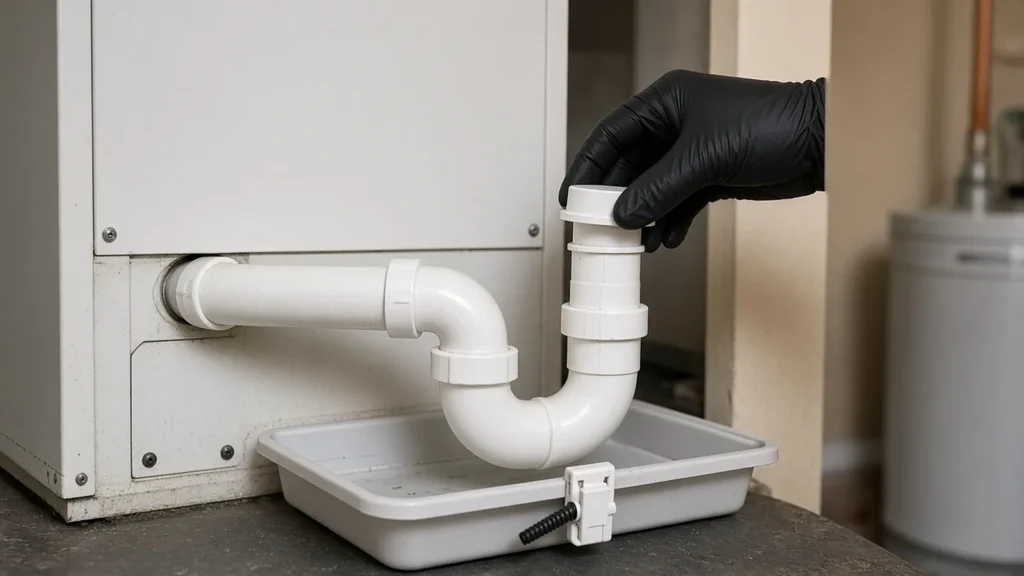
The trap itself is the usual choke point. It is the U-shaped bend near the air handler that holds a little water to keep air from being pulled backward through the line. That small reservoir of water is the first place sludge collects.
What does the Florida code require for a condensate drain?
The Florida Building Code, Residential, sets the ground rules in Section M1411. In plain terms:
- The drain has to carry condensate from the pan to an approved place of disposal and keep a slope of at least 1/8 inch per foot in the direction of flow.
- Drain piping has to be at least 3/4 inch nominal size.
- Where an overflow could damage the building, you need a secondary drain or an auxiliary pan, or a water-level switch that shuts the system down if the primary drain stops up.
- Drain lines must be set up so a blockage can be cleared without cutting the pipe.
- A condensate pump installed in an attic or crawl space has to be wired so the equipment stops running if the pump fails.
That last point about clearing blockages without cutting is worth noticing. If your trap has no cleanout cap, no tee, and no way in except a hacksaw, you are working with an older setup, and adding a proper cleanout tee and service port is a small change that pays for itself the first time the line backs up.
What are the warning signs of a clogged drain line?
The clearest warning sign is a system that keeps shutting off with water sitting in the pan. Many homes around Ocala have a float switch on the pan or the primary drain, and when water rises it cuts power to the outdoor unit. The thermostat may still show cooling, the fan may keep running, but the air coming out of the vents is no colder than the hallway.
Other signs to watch for:
- Water dripping from a pipe above a window or a soffit. That is often the secondary line, and it means the primary is already stopped up.
- A musty odor near the indoor unit.
- Rust or water stains on the closet floor, the garage slab, or the ceiling under an attic air handler.
- No water at the primary outlet outside on a hot, humid afternoon when the system has been running for an hour.
That secondary drain dripping over a window is a message, not a convenience. The FBC says the auxiliary drain should end in a conspicuous spot so occupants will notice it. If you see it running, the primary line needs attention now, before the backup fills too.
How can I keep my condensate drain clear?
The best way to keep a Florida drain clear is a simple, regular routine. ENERGY STAR lists inspecting the condensate drain as part of routine maintenance and warns that a plugged drain can cause water damage in the house and affect indoor humidity levels. The EPA mold guidance says to keep drip pans clean and drain lines unobstructed and flowing properly. Here is a routine that fits Ocala weather:
- Find your lines. Locate the cleanout tee near the indoor unit and both outlets outside, the primary near the foundation and the secondary if you have one.
- Flush it a few times a year. Turn the thermostat to off. Remove the cleanout cap and slowly pour a cup or two of water down the line, then watch the outlet to confirm it flows. Check your equipment manual before pouring anything other than water, since some manufacturers limit what goes in the pan.
- Clear the outlet. Pull back mulch, grass and soil from the end of the pipe and check for insect nests. Keep a couple of inches of clear space around it.
- Use the wire trick carefully. The Department of Energy suggests occasionally passing a stiff wire through your unit’s drain channels to prevent clogs. Go gently and do not force anything through a fitting.
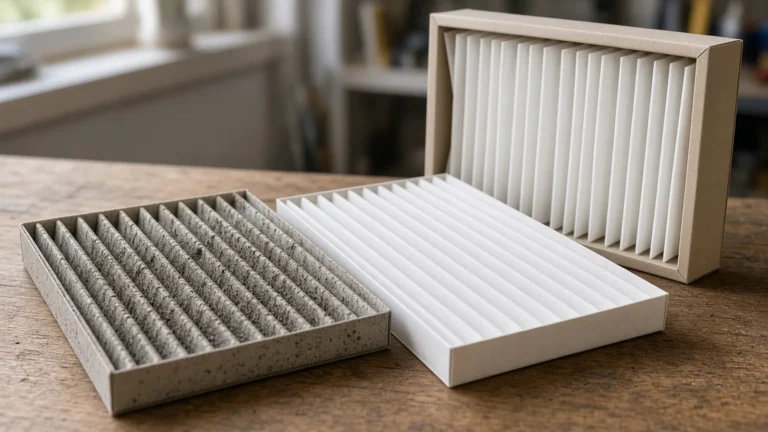
- Change filters on schedule. A filter that fits snugly keeps debris off the coil and out of the pan. For help choosing one, see our guide to MERV ratings and choosing an air filter.
- Test the float switch. With the system cooling, lift the float or add water to the pan slowly. The outdoor unit should shut off. If it does not, the switch is not protecting you.
A wet/dry shop vacuum on the outside outlet can pull a soft clog free, and plenty of Ocala homeowners keep one in the garage just for this. Hold the hose tight against the pipe and run it for a minute.
When should I call an HVAC technician about my drain?
Call a technician when water is already overflowing, when the line clogs again within weeks of clearing it, or when the drain runs through the attic and you cannot see the whole path. Repeat clogs usually point to a cause that a flush will not fix: a sagging pipe that holds water, a trap with the wrong depth for your blower, a dirty coil shedding debris, or air bypassing a loose filter rack. A cracked or rusted primary pan also needs a professional look, because no amount of line cleaning will stop a pan that leaks from the bottom.
During a maintenance visit, checking the drain, the pan and the safety switch is standard work. If yours is already dripping or the system keeps shutting down, our AC repair page explains what a diagnostic visit covers. For homes with the air handler in a garage, hall closet or attic, our air handler service page covers the indoor side in more detail.
Frequently asked questions
Is it normal to see water dripping outside from my AC in the summer?
Yes, from the primary outlet near the slab. On a humid Ocala afternoon a working drain can run steadily. Water from a pipe above a window or door is different, because that is usually the backup line telling you the main one is blocked.
Can a clogged drain line make my house feel more humid?
It can. If the system shuts off on its float switch, it is not removing moisture at all, and a pan that stays full can let some of that water evaporate back into the airstream. ENERGY STAR notes that a plugged drain can affect indoor humidity levels.
Should I pour bleach down my AC drain line?
Check your equipment manual first, since manufacturers set their own rules about what can go into the pan and line. Plain water flushes and keeping the line physically clear are the safest regular habits.
How do I know if my home has a float switch?
Look for a small plastic device clipped to the edge of the drain pan or installed in a tee on the primary line near the air handler, with thin wires running back to the unit. If you cannot find one, ask a technician to check during your next visit.
Does a condensate pump need any special care?
Yes. Pumps have a small reservoir and a check valve that collect the same sludge as a gravity line. Clean the reservoir when you flush the drain, and make sure the pump is wired to shut the system off if it fails, as the Florida code requires for attic and crawl space pumps.
Sources
- Florida Building Code, Residential 2023, Chapter 14, Section M1411 Condensate Disposal (UpCodes)
- U.S. Department of Energy, Energy Saver 101: Home Cooling (PDF)
- ENERGY STAR, Maintenance Checklist
- U.S. EPA, A Brief Guide to Mold, Moisture and Your Home
- Florida Climate Center, 1991-2020 Normals for Ocala