MERV Ratings Explained: Choosing an Air Filter Without Choking Your System
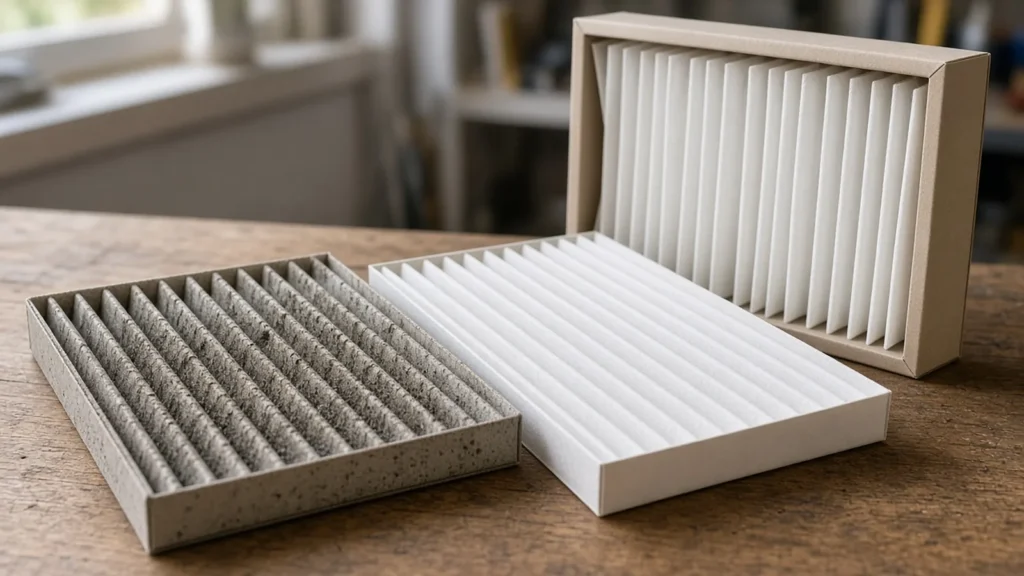
Walk into any home improvement store on US 441 or out by the interstate and you will find a wall of air filters with numbers, colors and bold claims printed all over them. Some homeowners grab the cheapest one. Others grab the most expensive one, figuring it must be best. Both choices can cause trouble in a Central Florida home, and the reasons have more to do with airflow than with the price tag.
A filter is a balancing act. It has to catch enough dust, pollen and fine particles to protect your lungs and your equipment, without blocking so much air that the system struggles. The MERV rating is the best tool you have for striking that balance, once you know how to read it.
What does MERV stand for?
MERV stands for Minimum Efficiency Reporting Value. According to the EPA, it reports a filter’s ability to capture particles between 0.3 and 10 microns, and the rating comes from a test method developed by ASHRAE, the American Society of Heating, Refrigerating and Air-Conditioning Engineers. The higher the MERV, the better the filter traps particles in those size ranges.
For perspective, a human hair is far larger than 10 microns. The particles MERV deals with include household dust, pollen, mold spores, pet dander and the finer particles found in smoke.
What do the MERV numbers actually mean?
The EPA publishes a table based on the ASHRAE test that shows how much a filter captures in three particle size ranges. A few rows tell the story:
- MERV 8: captures at least 20 percent of particles in the 1 to 3 micron range and at least 70 percent in the 3 to 10 micron range. It does not have a rated capture for the finest range, 0.3 to 1 micron.
- MERV 11: at least 20 percent of 0.3 to 1 micron particles, 65 percent of 1 to 3 micron, and 85 percent of 3 to 10 micron.
- MERV 13: at least 50 percent of 0.3 to 1 micron particles, 85 percent of 1 to 3 micron, and 90 percent of 3 to 10 micron.
The jump from MERV 8 to MERV 13 matters most in that smallest range. The EPA describes the small particles of greatest health concern as PM2.5, and that fine range is where a higher rating earns its keep.
Is a HEPA filter better than MERV 13?
On paper, yes. The EPA lists HEPA filters at 99.97 percent or better capture of 0.3 micron particles, and notes they are common in portable air cleaners. A true HEPA filter is seldom a fit for a standard residential central system because of the resistance it adds, so HEPA in a home usually means a room unit or a dedicated whole-home setup with its own fan.
Can a high-MERV filter hurt my air conditioner?
It can, if the system was not designed for it or the filter is too small or too thin. A denser filter adds resistance. If the blower cannot overcome that resistance, less air moves across the indoor coil. In cooling season that can drop coil temperature, lead to icing, reduce capacity and strain the blower motor. In heating season on a heat pump, it can push the system to lean harder on electric strips.
The EPA’s guidance is measured on this point. It says most furnaces and HVAC systems can accommodate a MERV 13 filter without creating equipment problems, provided the filter is replaced frequently. It also says to choose at least MERV 13 or as high a rating as your system fan and filter slot can accommodate, and that you may need an HVAC technician to determine the best option. That is fair advice. Plenty of Ocala systems handle MERV 13 well. Some older or undersized return setups do not.
A few signs your filter is fighting your system:
- Weak airflow at the registers, especially in the rooms farthest from the air handler
- A whistling or roaring sound at the return grille
- A filter that bows or gets sucked out of its frame
- Ice on the copper lines or the indoor coil during cooling
Why does filter thickness matter so much?
Filter thickness matters because a deeper filter has more surface area, and more surface area means lower resistance at the same MERV. The EPA notes filters commonly come in thicknesses from 1 to 5 inches. A 4-inch or 5-inch pleated media filter in a proper cabinet can often deliver MERV 13 performance with less airflow penalty than a thin 1-inch filter carrying the same rating, and it usually lasts longer between changes.
Many homes around Ocala have a 1-inch filter slot in a return grille in the hallway ceiling or wall. That setup can work with a mid-range filter, but upgrading to a high MERV in a thin slot is where trouble tends to start. Adding a media filter cabinet at the air handler, or enlarging a too-small return, are common fixes.
How do I choose the right filter for a Florida home?
Choosing well comes down to a short list of questions:
- What size and thickness does your slot take? Read the dimensions on the old filter’s frame. The EPA stresses that the filter should fit snugly so air does not leak around it and you do not have to bend or crush it to fit.
- What does your equipment manual say? The EPA notes HVAC systems are not commonly labeled with filter recommendations, so check the manual or ask a technician.
- Who lives in the house? Allergies, asthma or a household on a horse property kicking up arena dust may justify a higher MERV, matched with the right filter depth.
- How hard does your system run? In Central Florida, the blower runs for long stretches most of the year, which means a filter loads up faster here than in milder climates.
A gap around the edge of the filter is just as important as the rating. Air takes the easy path. A MERV 13 filter with a half-inch gap can perform worse than a snug MERV 8, because unfiltered air goes straight to the coil. That dirty coil leads to drain problems too, as explained in our condensate drain article.
Which filter fits common Ocala situations?
No single filter is right for every house, but some patterns come up again and again in Marion County homes:
- Spring pollen. When the oaks and pines let loose and cars turn yellow, a snug MERV 11 to MERV 13 pleated filter catches far more pollen than a basic fiberglass panel. Check it more often during those weeks, because it loads up quickly.
- Smoke days. Wildfire and prescribed-burn smoke can drift over Ocala. Smoke particles are fine, which is where MERV 13 and up outperform lower ratings, according to the EPA’s capture table.
- Pets and horses. Dander and barn dust load a filter fast. A deeper media filter gives you more capacity before airflow suffers.
- New construction or renovation. Drywall dust is very fine and clogs filters quickly. Check the filter weekly while work is going on, and never run the system without one.
- An older system with a small return. Stay with a rating the system handles comfortably, and talk with a technician about adding a media cabinet or more return area before stepping up.
Whatever you pick, write the date on the filter frame with a marker when you install it. It is the easiest way to know how long it has really been in there.
Will a better filter fix my indoor air quality?
A better filter helps, but it is not the whole answer. The EPA says filtration is an effective supplement to source control and ventilation, not a replacement for them. In Ocala homes, humidity control is a big part of air quality too. The EPA also cautions that running the system longer just for filtration raises electricity costs and may lead to less reliable humidity control during cooling season.
The EPA also advises avoiding air cleaners that intentionally produce ozone. If you are shopping for a whole-home air cleaner, ask what it emits before you buy.
If your home still feels stuffy, dusty or musty with a good filter in place, the problem may be duct leakage pulling attic air, a dirty coil, or a system that is oversized and short on dehumidification. Our AC maintenance visits include checking the filter fit and airflow, and our central air conditioning page covers how return sizing affects the whole system. To ask about a filter upgrade for your home, send us a message.
Frequently asked questions
Is MERV the same as MPR or FPR?
No. MERV comes from the ASHRAE test method. MPR and FPR are brand-specific scales used by particular manufacturers and retailers, and they do not convert neatly to MERV. Compare MERV when you can.
Are washable filters a good idea in Florida?
Check for a published MERV rating first, since many washable filters do not list one. A washable filter also has to dry completely before it goes back in, and a damp filter in a humid house is an invitation for mold, so disposable pleated filters are simpler for most homeowners.
Do electrostatic filters work better than pleated ones?
Performance varies widely by product. Look for a published MERV rating. If none is given, you have no standard way to compare it to a pleated filter.
Should every return grille in my house have the same filter?
Yes, if your system has more than one filtered return, use the same size, rating and change schedule at each one. Mixing a dense filter in one grille with a loose one in another shifts airflow to the easier path.
Sources