Hurricane Season and Your Air Conditioner: Before, During and After a Storm in Marion County
Folks who grew up in Ocala know the rhythm of a tropical storm warning. The bread aisle empties, the gas lines on SR 200 stretch back to the road, and everybody starts eyeing the big live oak in the side yard. What gets less attention is the machine sitting in that side yard under the oak: the outdoor half of your air conditioner or heat pump.
Being inland helps. Ready.gov notes that hurricanes do damage through storm surge, wind, rip currents and flooding, and here in the middle of the state we are spared the surge. Wind, falling limbs, heavy rain, standing water and power outages that drag on for days still reach Marion County, and every one of those can hurt a cooling system. A little planning keeps a bad week from turning into a long, hot one.
When is hurricane season in Florida?
The National Hurricane Center sets the official Atlantic season at June 1 through November 30. The NHC puts the statistical peak around September 10, with most activity falling between mid-August and mid-October. Based on the 1991-2020 climate period, an average season brings 14 named storms, 7 hurricanes and 3 major hurricanes.
For your air conditioner, that peak lines up with the hardest-working stretch of the year. Your system is already running long cycles in late summer heat, so any weakness in a capacitor, a contactor or a drain line tends to show up right when a storm knocks the power around.
How should I prepare my AC before a hurricane?
Most of the prep work should happen early in the season, not the night before landfall. A good list for June or July:
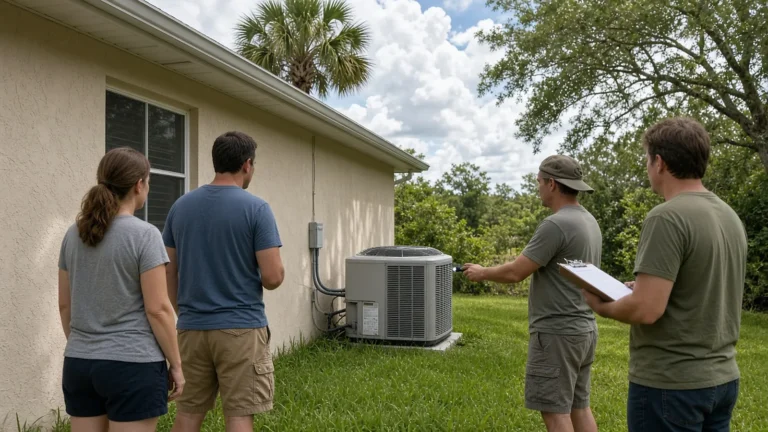
- Get a maintenance visit early. A technician can spot a bulging capacitor, a pitted contactor or a weak drain before a storm finds them for you. Our AC maintenance page lists what that visit covers.
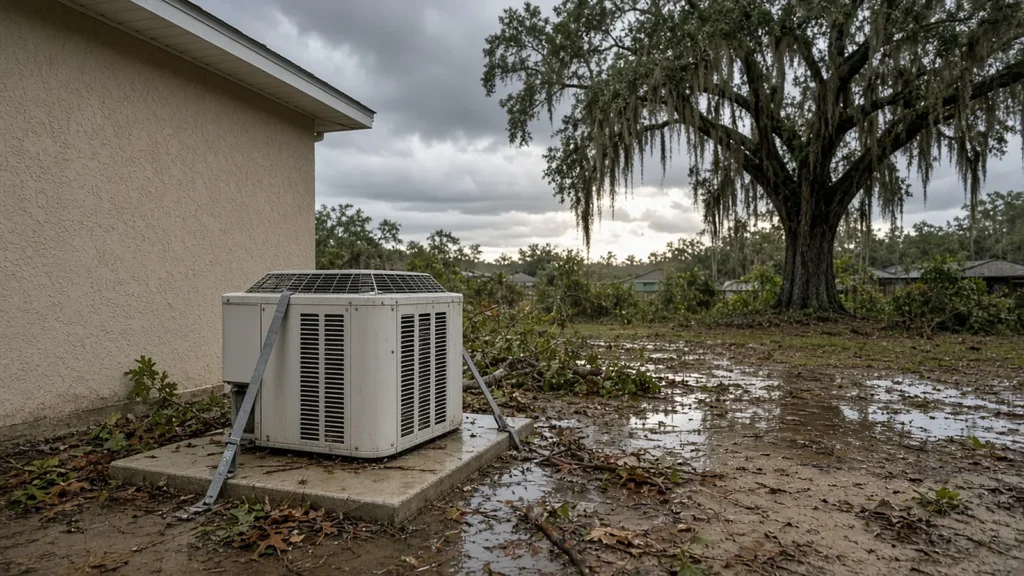
- Check the tie-downs. The Florida Building Code, Residential, requires appliances designed to be fixed in position to be fastened or anchored in an approved manner (Section M1307.2). Look for metal straps or brackets holding the condenser to its pad. Rusted straps or missing screws should be fixed in calm weather.
- Trim the trees. Oaks of every kind shed limbs in strong wind. Have overhanging branches cut back from the unit and the roofline well ahead of storm season.
- Clear the yard. Ready.gov recommends de-cluttering drains and gutters and bringing in outside furniture. Anything loose near the condenser, from a garden gnome to a pool noodle, can become a projectile aimed at the coil fins.
- Document the equipment. Snap photos of both units and their data plates. Ready.gov suggests keeping copies of insurance policies and important documents in a secure, password-protected digital space, and equipment photos with model numbers belong there too. They make an insurance claim much easier.
- Know your disconnect. Find the outdoor disconnect box beside the condenser and the breakers for the outdoor unit and air handler in your panel. Label them while the lights are on.
In the day or so before the storm arrives, run the house a couple of degrees cooler than usual. Pre-cooling and drying the air buys you some comfort if the power goes out. Close blinds on the sunny side, and keep doors shut so the cool air lasts.
Should I cover my outdoor unit before a storm?
Generally, no, as long as the system might still run. A condenser needs to move air across its coil to work, and running it while tarped or boxed in can overheat the compressor. If you do cover it, turn the system off at the thermostat and the disconnect first, and remove the cover before it ever runs again. Plywood leaned against the unit is worse than nothing in a real wind.
What should I do with my AC during the storm?
During the worst of the weather, turn the system off and leave it off until conditions settle. Power in a tropical storm tends to flicker, drop and come back several times. Each restart under brownout voltage strains the compressor, and surges can damage the control boards inside both units.
A practical sequence:
- Set the thermostat to off when wind picks up or the lights start to flicker.
- If you can do it safely, also switch off the breakers for the outdoor unit and air handler.
- Unplug sensitive electronics, as Ready.gov advises during outages, to limit surge damage.
- Stay inside. Do not go out to check the condenser in the middle of the storm.
Is it safe to run my air conditioner on a generator?
It can be, if the generator is sized for the job and connected the right way. Most central systems need far more starting power than a small portable unit can provide. If you want the AC on backup power, NFPA says connecting a generator to house wiring requires a properly rated transfer switch installed by a qualified electrician under the National Electrical Code. Never back-feed a dryer outlet with a homemade cord. It puts utility line workers and your own family at risk.
Portable generator safety rules matter more than comfort:
- Run it outdoors, at least 20 feet from doors, windows and vent openings, per both NFPA and Ready.gov.
- Never run it in an attached garage, even with the door up.
- Install battery-backed carbon monoxide detectors on every level of the home, as Ready.gov recommends.
- Turn it off and let it cool before refueling.
NFPA puts it bluntly: portable generator exhaust is toxic and deadly, and if you can smell it, you are breathing it. No amount of cool air is worth that risk.
What should I check before turning my AC back on after the storm?
Walk around the outside unit before you touch the thermostat. Look for:
- Limbs, shingles or debris on top of the unit or wedged in the fins
- A condenser pushed off its pad or tilted, which can stress refrigerant lines
- Crushed or kinked copper lines running into the house
- Water that reached the unit’s electrical compartment
- Damaged wiring, a disconnect box knocked loose, or a whip pulled out of its fitting
Ready.gov’s flood guidance is direct: do not touch electrical equipment if it is wet or if you are standing in water, and turn off the electricity if it is safe to do so. If water rose to the level of the outdoor unit’s controls or reached an air handler in a garage, leave it off and have it inspected. Wet controls and motors can short and fail when power returns.
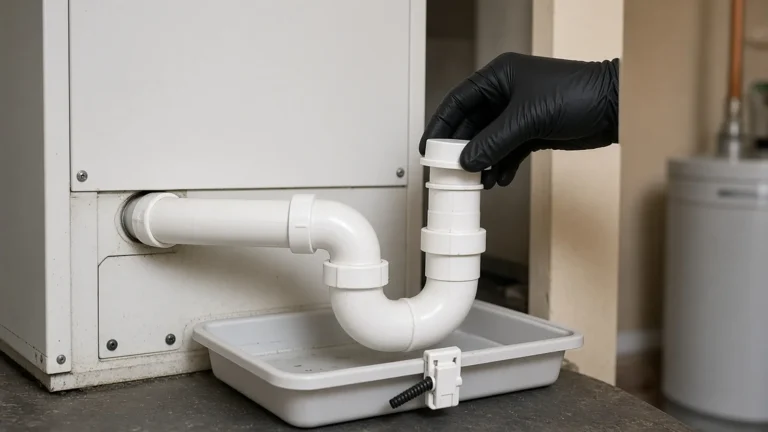
If everything looks clean and dry, restore the breakers and give the system a few minutes before calling for cooling. Clear the condensate outlet outside, since storm runoff can plug it with sand and leaves. Our article on keeping a Florida condensate drain clear covers what to look for.
Why does my AC struggle after the power has been out for days?
After a long outage, your home has soaked up heat and moisture. Walls, furniture, flooring and the air itself are warm and damp. The system has to remove all of that stored heat and humidity before the room temperature starts to drop, so the first day back can feel slow even when nothing is wrong.
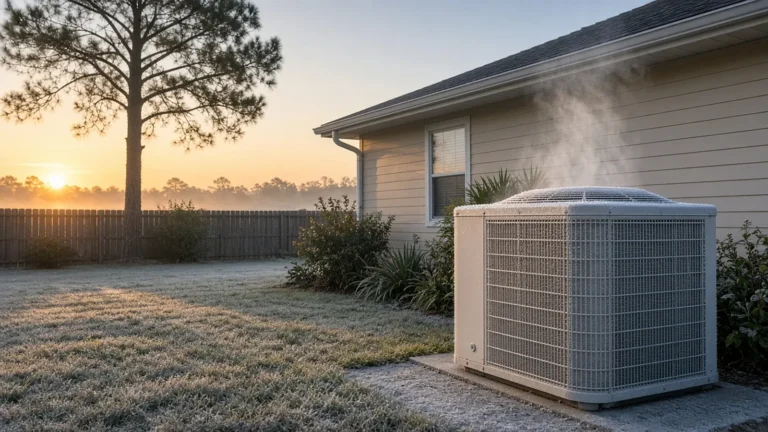
Give it time and keep the doors shut. If it runs for many hours and the supply air is not getting cold, or if you hear grinding or buzzing, or see ice on the copper lines, turn it off and call for AC repair. Running a damaged unit hard right after a storm can turn a repair into a replacement.
Mold is the other worry after long outages. The EPA’s mold guidance says to dry water-damaged areas and items within 24 to 48 hours to prevent mold growth. Running the AC once power returns, along with fans and a dehumidifier if you have one, helps bring indoor humidity back down.
How do I protect my system before next season?
After the storm passes and things settle, it is worth a quick recheck: tie-downs, refrigerant line insulation, the drain, and the electrical connections. If your system took a beating, a maintenance plan visit before next June gives you a fresh baseline. For homes across the county, from Belleview to Dunnellon, our Marion County service area page shows where we work.
When you need help, send us a message and describe what you found at the unit. Photos help.
Frequently asked questions
Do I need hurricane straps on my outdoor AC unit?
The Florida residential code requires fixed appliances to be fastened or anchored in an approved manner. Condensers in Florida are commonly strapped or bolted to the pad. If yours is sitting loose, have it anchored before peak season.
Can wind-blown rain damage my condenser?
Outdoor units are built to handle rain. The risk comes from rising water reaching the electrical compartment, debris hitting the coil, and power surges, not ordinary rain falling on the cabinet.
How big a generator does it take to run central air?
It depends on the system’s size and starting demand, which is far higher than its running demand. An electrician can size a standby or portable unit with a transfer switch. Do not guess and plug in.
Should I turn off my AC at the breaker before evacuating?
If you are leaving, switching off the outdoor and air handler breakers protects the equipment from surges while you are gone. Follow official evacuation orders first. Equipment can be replaced.
What if my air handler is in the garage and the garage flooded?
Leave it off. Water in the cabinet can reach the blower motor, the control board and the electric heat strips. Have a technician inspect and dry it before you restore power.
Sources
- National Hurricane Center, Tropical Cyclone Climatology
- Ready.gov, Hurricanes
- Ready.gov, Floods
- Ready.gov, Power Outages
- NFPA, Generator Safety Tip Sheet (PDF)
- Florida Building Code, Residential 2023, Chapter 13, Section M1307.2 Anchorage of Appliances (UpCodes)
- U.S. EPA, A Brief Guide to Mold, Moisture and Your Home