Why Your Electric Bill Jumps During an Ocala Cold Snap: Heat Pumps, Auxiliary Heat and Defrost
Every January it happens somewhere around Ocala. A front blows through, the morning news shows frost on the pastures out toward the horse farms, and a few weeks later somebody opens an electric bill that looks like it belongs to a different house. The system worked fine. The house stayed warm. So where did the money go?
In most homes here, the answer is the backup heat on a heat pump system. Understanding how that backup works, and what triggers it, is the most useful thing a Central Florida homeowner can know about winter comfort.
How cold does it really get in Ocala?
Not very, most of the time, which is exactly why cold snaps catch people off guard. According to the Florida Climate Center’s 1991-2020 normals for Ocala, the average January low is 45.6 degrees. The same normals list 791 heating degree days for the year and 3,104 cooling degree days, close to four times as many. Our systems spend most of their life cooling.
But averages hide the hard nights. It only takes a handful of mornings near or below freezing to change the math, and every system here has to be ready for them. Those few nights are where much of a winter bill gets made.
How does a heat pump heat a home?
A heat pump heats your home by moving heat rather than making it. In winter it runs the refrigerant cycle in reverse, pulling heat from the outdoor air and releasing it inside, even when the air feels chilly to you. The U.S. Department of Energy says heat pumps are the most efficient form of electric heating, providing up to three times more heat than the energy they use, and can cut electricity use for heating by about half compared to electric furnaces or baseboard heaters.
That efficiency depends on outdoor temperature. As it gets colder, there is less heat in the air to collect, the heat pump’s output drops, and the house is losing heat faster at the same time. At some point the heat pump alone cannot keep up.
What is auxiliary heat, and why does it cost so much?
Auxiliary heat is the electric resistance heat strip package inside your air handler that supplements the heat pump. When the compressor cannot hold the thermostat setting, the strips switch on. Your thermostat may show it as AUX, AUX HEAT or a second stage.
Heat strips work like a giant toaster. They turn electricity straight into heat, one for one, with none of the multiplying effect that makes a heat pump efficient. The Consortium for Energy Efficiency, in a guide published through the Department of Energy, calls auxiliary mode costly and inefficient and advises having an HVAC professional check the unit if you see frequent use.
So a cold snap hits your bill twice. The heat pump runs longer because the house is losing heat faster, and the strips fill in the gap at a much higher cost per hour. A system that leans on its strips for a week can use noticeably more power than it would in a normal month.
Is emergency heat the same as auxiliary heat?
No. Auxiliary heat comes on automatically alongside the heat pump. Emergency heat, often labeled EM HEAT, is a manual setting that shuts the heat pump off and runs only the strips. It is meant for when the outdoor unit is broken or iced over, not for a cold night. Leaving it on by mistake is one of the costliest thermostat slips a homeowner can make.
What is defrost mode, and is it running up my bill?
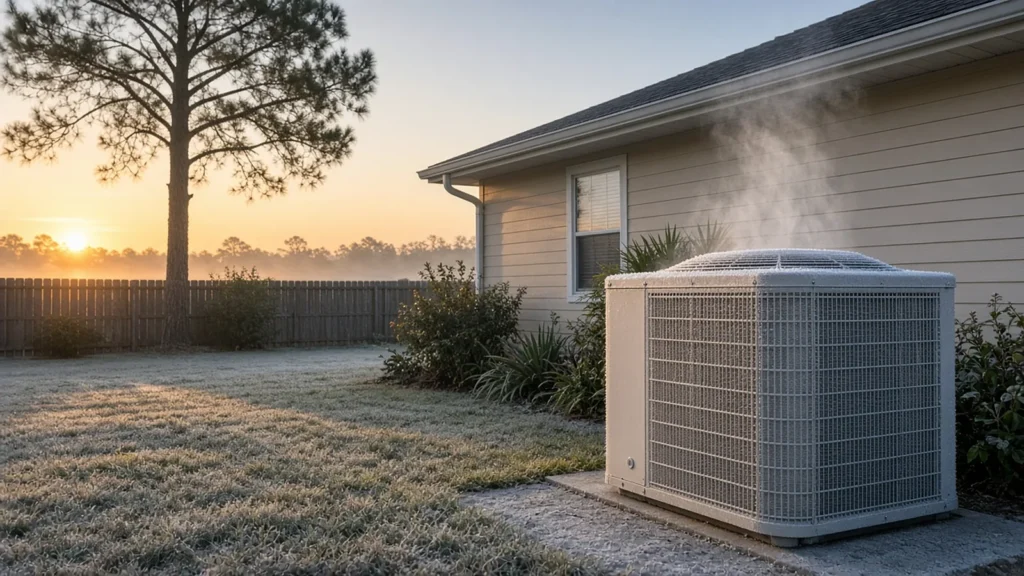
Defrost is a normal, short cycle that clears frost off the outdoor coil. When the outdoor temperature drops near freezing, especially on humid mornings, frost builds on the coil and blocks airflow. The system briefly reverses to send warm refrigerant through the outdoor coil and melt it.
The CEE guide describes it this way: the outdoor coil may frost up but clears itself, water drips at the outdoor unit, and on ducted systems supplemental heat may come on during defrost to prevent a gap in heating. That is why you may see vapor rising from the outdoor unit and feel a burst from the strips at the same time. Both are normal.
Defrost does use some extra energy, but on a working system it is a modest piece of the bill. It becomes a real problem when defrost does not work properly. A coil that stays iced turns your heat pump into an expensive fan and leaves the strips carrying the whole load.
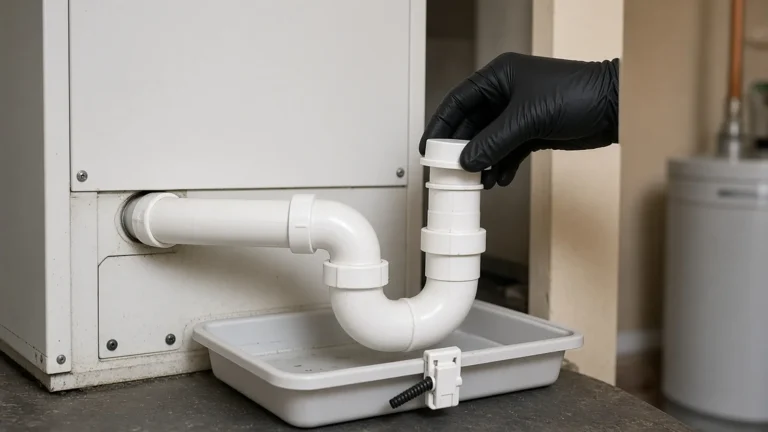
One local note: the CEE guide warns not to let defrost water pool and refreeze on a walkway. On Ocala’s rare hard freezes, keep an eye on any path or patio next to the outdoor unit.
Does the Florida code limit how often heat strips run?
Yes. The 2023 Florida Building Code, Energy Conservation, Section R403.1.3, requires heat pumps with supplementary electric-resistance heaters to have controls that limit strip operation to times when the compressor cannot meet the thermostat setting, when the unit is in defrost, or when the heat pump or thermostat malfunctions. A properly installed system should not be running strips on a mild day. If yours does, something is wrong with the wiring, the thermostat setup or the heat pump itself.
How can I lower my heating bill during a cold snap?
Most of the savings come from avoiding unnecessary strip time. These habits help:
- Hold a steady setting. The CEE guide says heat pumps are efficient with a steady thermostat setting and recommends avoiding abrupt changes of 3 degrees or more. A big jump on a cold morning is a near-certain way to call the strips.
- Skip the deep setback. DOE advises against manually setting back a heat pump thermostat if it causes backup resistance heat to come on. Setbacks make sense mainly if you will be gone more than a day, per CEE.
- Use the right thermostat. DOE recommends a smart or programmable thermostat with functions suited to a heat pump, since those are designed to limit strip use during recovery.
- Keep the outdoor unit clear. Leaves, pine straw and overgrown shrubs choke airflow across the coil. Give it room.
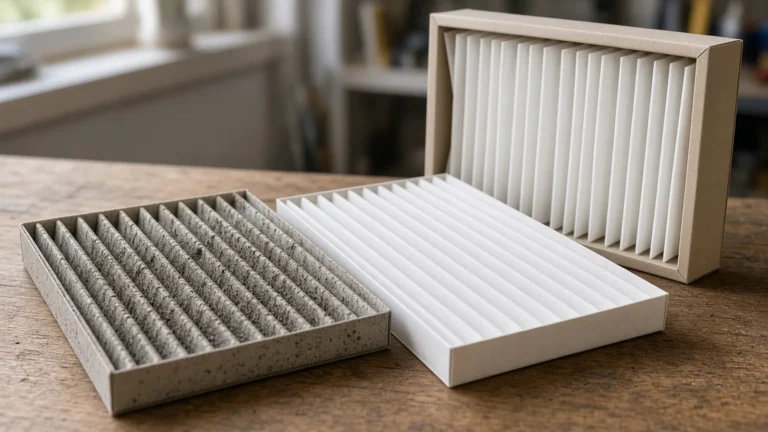
- Change the filter. A dirty filter reduces airflow across the indoor coil, which lowers heat pump output and invites the strips in.
- Close the gaps. Weatherstrip doors and seal obvious leaks around attic hatches. The less heat your house loses, the less the strips have to make up.
What can I check myself on a cold morning?
Before you call anyone, a few quick checks can tell you a lot. None of them require opening a panel.
- Read the thermostat mode. It should say HEAT or AUTO, not EM HEAT. If someone in the house switched it to emergency heat during the last cold night, switch it back.
- Look at the outdoor unit. The fan should be spinning and the unit humming. A light coat of frost that comes and goes is normal. A solid block of ice that never clears is not.
- Watch a defrost cycle. You may hear a whoosh and see the fan stop while vapor rises off the coil. Within several minutes the fan should start again and the frost should be gone.
- Check the filter. If it is gray and packed, change it now. Airflow matters in heating mode just as much as in summer.
- Look at the breakers. Heat strips usually have their own breakers in the main panel or at the air handler. If one has tripped, the house may struggle to stay warm on the coldest nights. Reset it once. A second trip means something is shorted or overloaded, so leave it off and call.
If everything looks right and the house still cannot keep up, write down what you saw and when. That record helps a technician diagnose the problem faster.
When should I have my heat pump checked?
If AUX shows constantly on mild days, if the outdoor unit stays iced for more than a short while, or if the house cannot hold temperature even with the strips running, call for heat pump repair. Common culprits include a low refrigerant charge, a failed defrost sensor or control board, a reversing valve problem, or a thermostat wired so the strips come on with every call for heat.
A fall checkup is the best way to head off winter surprises. Our heating maintenance page covers what we test, including strip amperage, defrost operation and thermostat staging. If your system is older and leans on its strips more every year, our heat pump installation page explains how newer equipment handles cold weather. To schedule a visit, send us a message.
Frequently asked questions
What outdoor temperature does a heat pump stop keeping up on its own?
It varies by equipment and by how well the house holds heat. The point where the heat pump alone just matches the home’s heat loss is called the balance point. A technician can estimate yours from the equipment data and the home’s load.
Why does my thermostat show AUX for a few minutes in the morning?
Short AUX periods during morning recovery or defrost are normal. Long stretches on mild days are not, and should be checked.
Can a frozen outdoor unit damage my heat pump?
Running iced for a long time can strain the compressor and leaves the home on strip heat alone. If ice does not clear within a defrost cycle or two, turn the system off and have it inspected.
Will a smart thermostat lower my winter bill?
It can, if it is set up for a heat pump with auxiliary heat lockouts and gradual recovery. A smart thermostat installed with generic settings may call for the strips more often, not less.
Sources